Lat pulldown
- Pin-loaded machine
- Vertical pull
- 6–12 reps
- Beginner-friendly
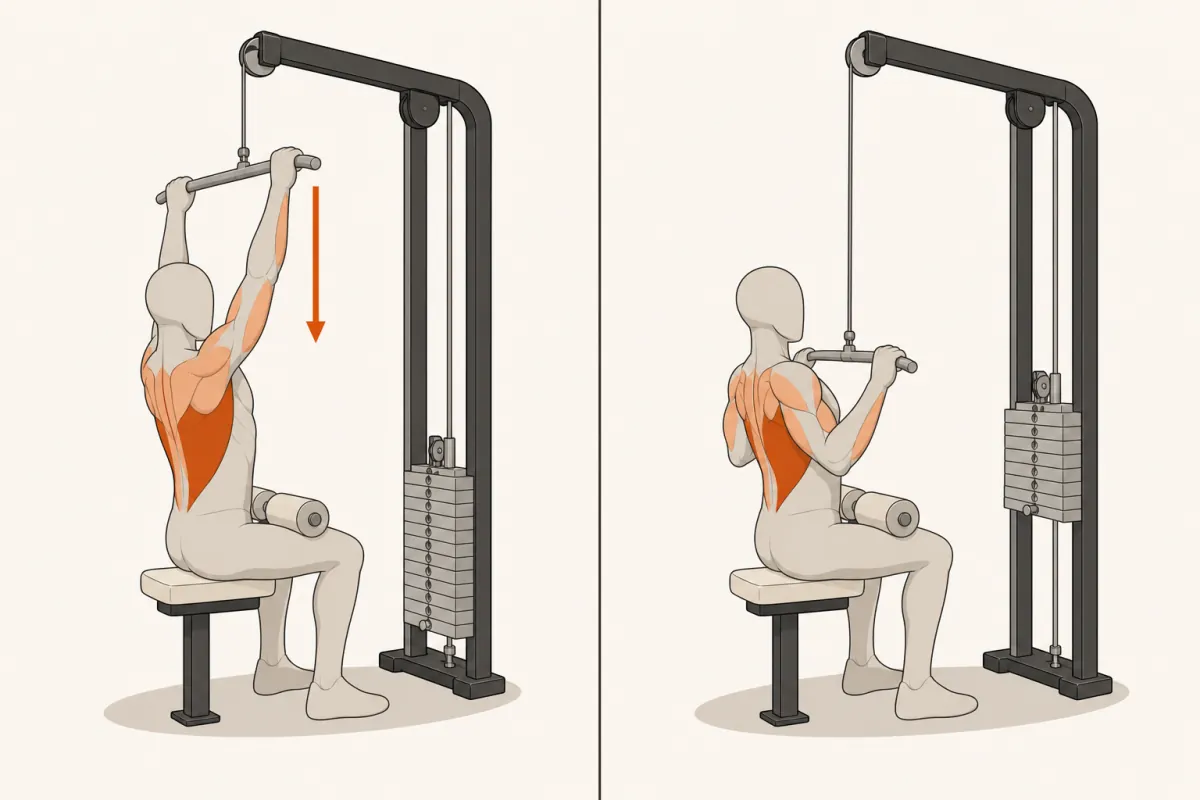
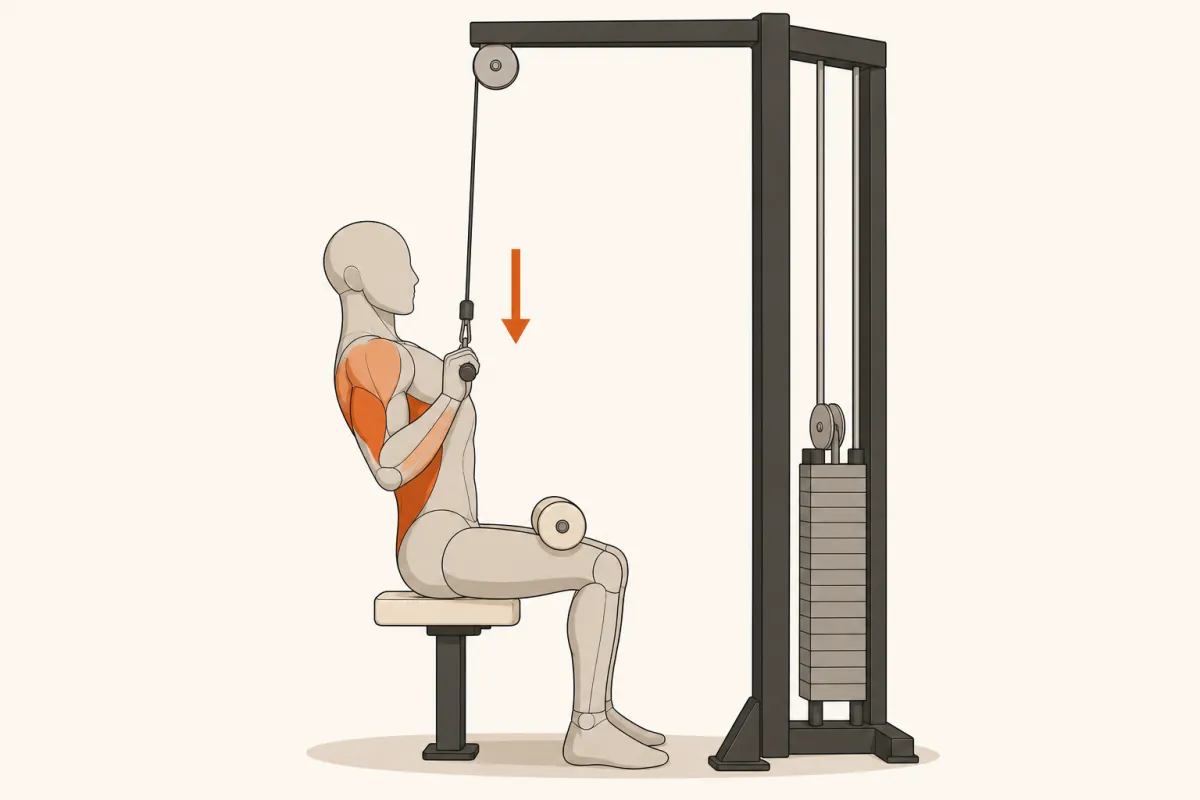
Generated illustration — follow the cues.
Setup
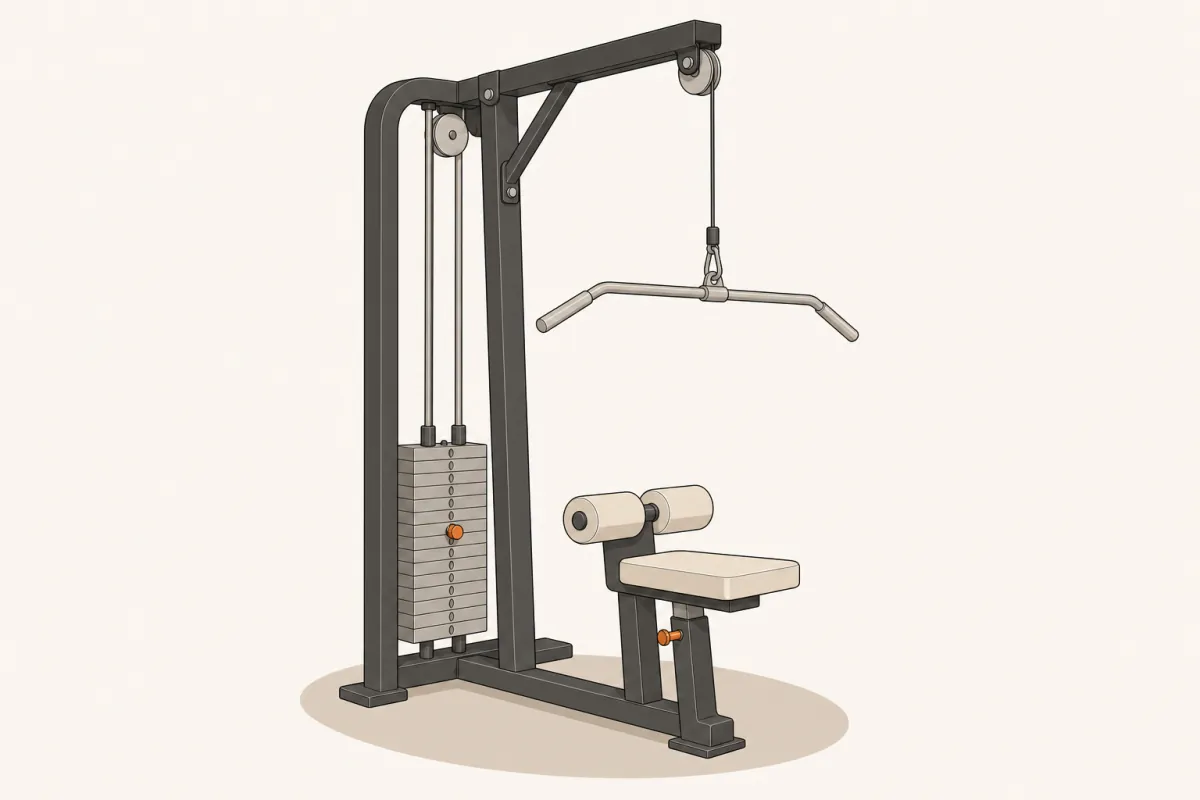
Set the thigh pad so your thighs are locked in with feet flat on the floor. Stand, take an overhand grip about 1.5 times shoulder width, then sit down with the arms straight.
Cues
- Sit tall with the chest up and a slight backward lean; keep that torso angle for the whole set.
- Start each rep by pulling the shoulder blades down, then drive the elbows down to your sides.
- Pull the bar in front of your face to the top of your chest; the elbows finish under or slightly behind the bar.
- Think 'elbows down', not 'hands down': the hands are hooks, wrists straight.
- Exhale on the pull and pause briefly with the bar at the chest.
- Return over 2–3 s to straight arms and a full lat stretch without letting the plates touch.
- Keep the neck neutral: look ahead and don't push the head forward to meet the bar.
Common mistakes
- Pulling the bar behind the neck: it forces the shoulder into an extreme position and works the lats no better than the front pulldown.
- Shrugging the shoulders toward the ears instead of pulling them down.
- Swinging the torso back to move the weight (momentum and lower-back strain).
- Ego loading: a weight you cannot control even at the bottom of the rep range.
- Letting the bar yank the arms up and the plates slam at the top.
- Cutting the range: stopping at chin level or never straightening the arms.
Muscles
- Main: Lats, Teres major
- Helping: Lower traps, Rhomboids, Rotator cuff, Rear delts, Biceps, Brachialis, Forearm flexors (grip)
Alternatives
Machine busy or missing? Closest first.
- Machine lat pulldown (lever)
- Plate-loaded lat pulldown
- Neutral-grip lat pulldown
- Assisted pull-up (machine)
- Single-arm cable pulldown
- Band-assisted pull-up
Pick your gym to see which of these it has: Gyms
Warm-up
| Set | Load | Reps |
|---|---|---|
| Warm-up 1 | 15 kg | 8 |
| Warm-up 2 | 20 kg | 4 |
| Working sets | 25 kg | 6–12 reps |
Example for the planner's first working load (25 kg, an 80 kg beginner). The train page builds the same ramp from your own working weight. Before it: 5 min of easy cardio (bike, rower or brisk incline walk) until you are warm and breathing a little faster, then lighter ramp sets before the first working set of each big exercise.
Facts
- Equipment
- Pin-loaded machine
- Movement
- Vertical pull
- Swap group
- Vertical pulls
- Load step
- 5 kg
- Rep range
- 6–12 reps
- Difficulty
- Beginner-friendly
- Support
- Seat or pad supports the torso
- Lower-back load
- Low
- Typical start
- 30 kg (untrained 80 kg man)
Also called: Wide-grip pulldown · Cable lat pulldown · Front pulldown · Lat Machine (Technogym Selection / Element) · Pulldown/Seated Row (Precor Vitality)
Sources
- Electromyographic analysis of three different types of lat pull-down — J Strength Cond Res, 2009. doi.org/10.1519/JSC.0b013e3181b8d30a
- Effects of grip width on muscle strength and activation in the lat pull-down — J Strength Cond Res, 2014. doi.org/10.1097/JSC.0000000000000232
- Voluntary increase in latissimus dorsi muscle activity during the lat pull-down following expert instruction — J Strength Cond Res, 2009. doi.org/10.1519/JSC.0b013e3181bb7213
- Lat Pulldown Standards — Strength Level, 2026. strengthlevel.com/strength-standards/lat-pulldown/kg