Pec deck (machine fly)
- Pin-loaded machine
- Chest fly
- 8–15 reps
- Beginner-friendly
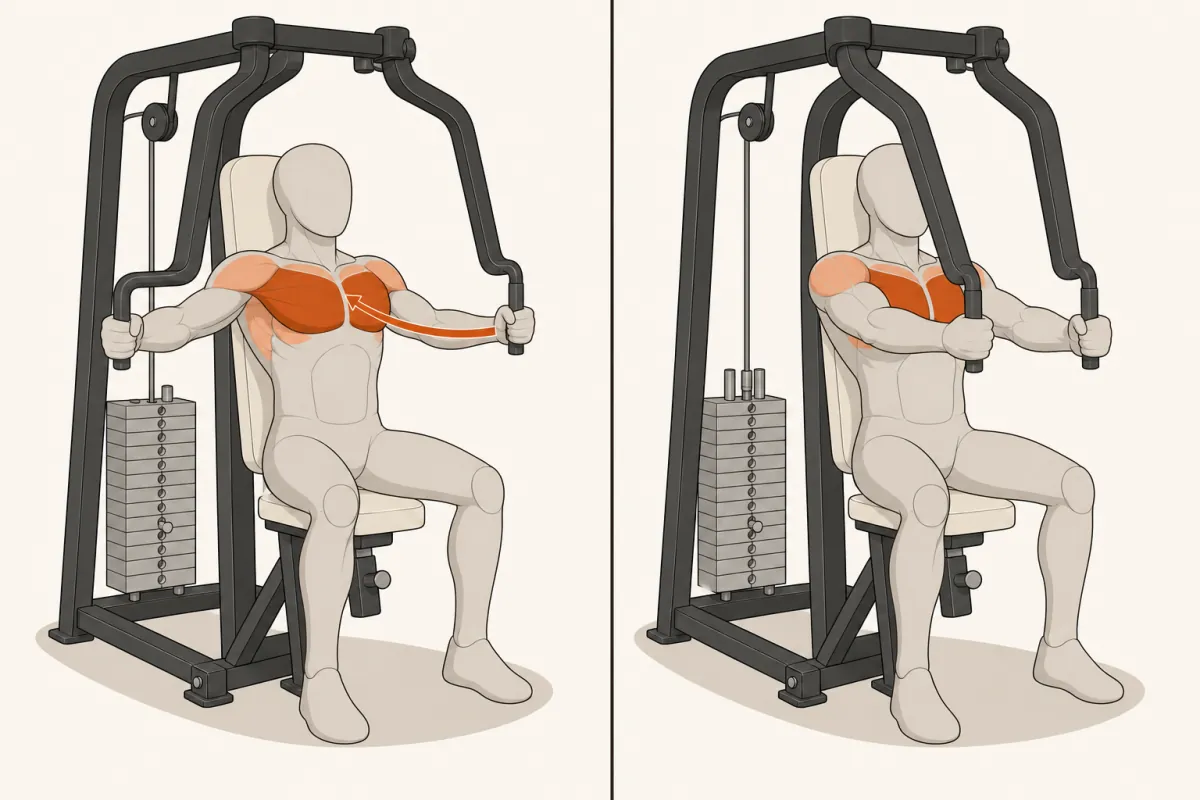
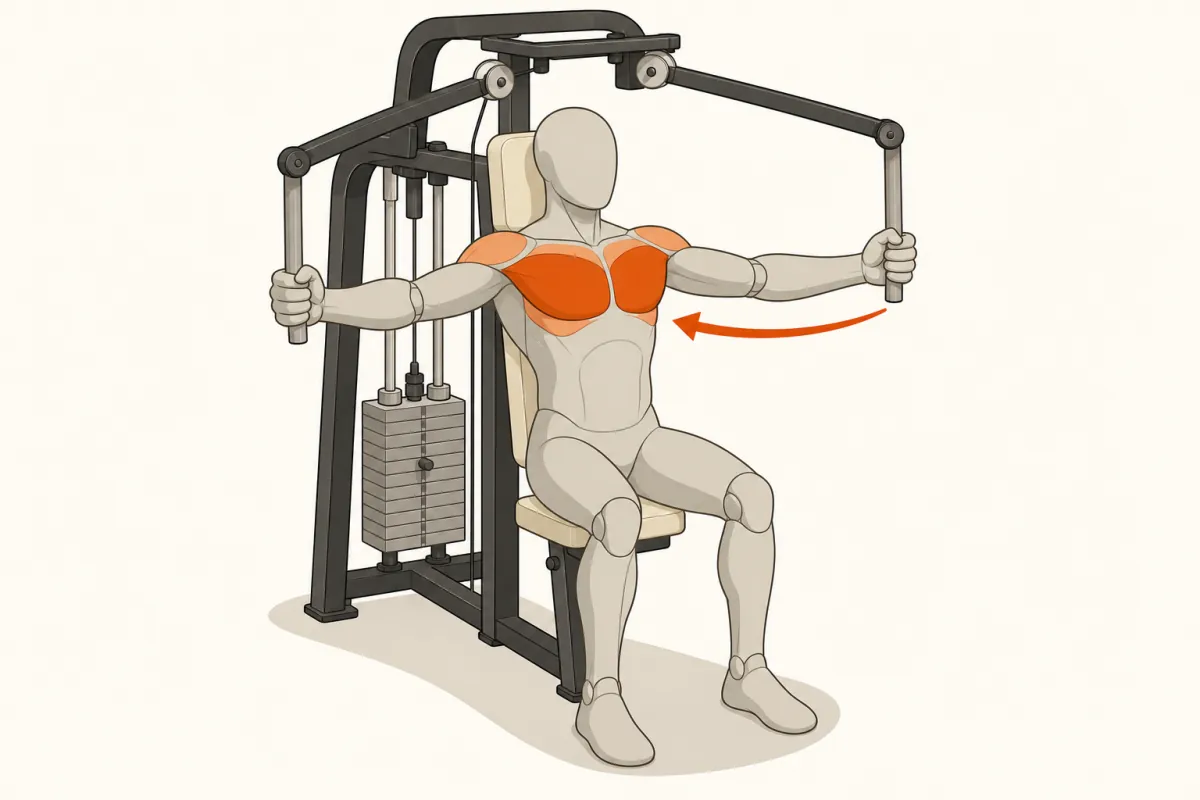
Generated illustration — follow the cues.
Setup
Set the seat so the handles (or arm pads) are at chest height with the upper arms about parallel to the floor. Set the start position so that at the widest point your hands are level with your body, never behind it.
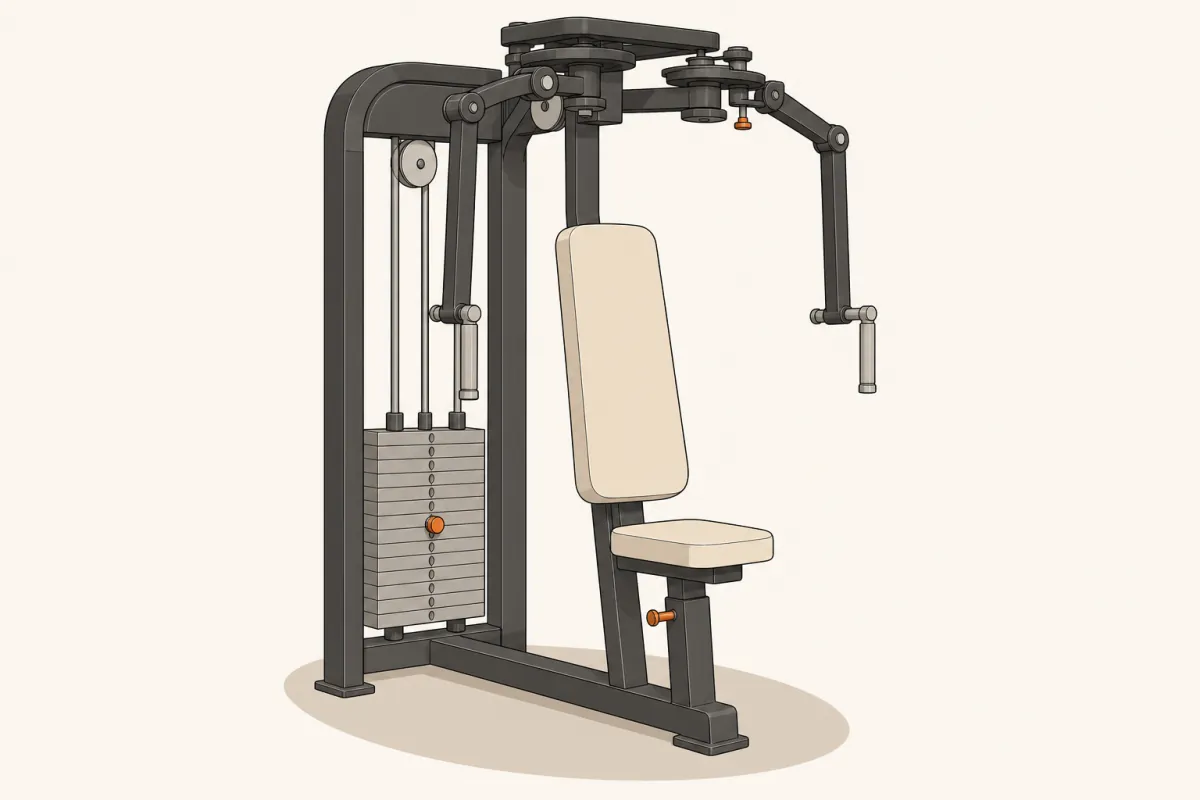
Cues
- Head and back on the pad, shoulder blades pulled back and down.
- Soft, fixed bend in the elbows — the movement happens at the shoulder.
- Bring the handles together in a wide arc, as if hugging a big tree.
- Squeeze for 1 s with the hands in front of your chest, breathing out.
- Open for 2–3 s until you feel a stretch across the chest with the elbows still in line with your torso.
- Keep the shoulders down and the neck relaxed through the whole rep.
- Don't let the plates touch between reps — keep the tension on.
Common mistakes
- Start position set too wide, so the arms are pulled behind the body — the “high-five” position that loads the front of the shoulder capsule.
- Bending and straightening the elbows, turning it into a press.
- Seat too low or too high: the handles end up above the shoulders or far below the chest.
- Shoulders rolling forward or shrugging as the hands meet.
- Letting the weight yank the arms open so the plates bang down.
- Ego loading with short, jerky reps.
Muscles
- Main: Mid chest (sternal pec)
- Helping: Upper chest (clavicular pec), Lower chest (costal pec), Front delts
Alternatives
Machine busy or missing? Closest first.
Pick your gym to see which of these it has: Gyms
Warm-up
| Set | Load | Reps |
|---|---|---|
| Warm-up 1 | 10 kg | 8 |
| Working sets | 20 kg | 8–15 reps |
Example for the planner's first working load (20 kg, an 80 kg beginner). The train page builds the same ramp from your own working weight. Before it: 5 min of easy cardio (bike, rower or brisk incline walk) until you are warm and breathing a little faster, then lighter ramp sets before the first working set of each big exercise.
Facts
- Equipment
- Pin-loaded machine
- Movement
- Chest fly
- Swap group
- Chest flies
- Load step
- 2.5 kg
- Rep range
- 8–15 reps
- Difficulty
- Beginner-friendly
- Support
- Seat or pad supports the torso
- Lower-back load
- Low
- Typical start
- 25 kg (untrained 80 kg man)
Also called: Technogym Selection / Element Pectoral · Technogym Selection 700 Dual Pectoral/Reverse Fly · Life Fitness Insignia Pectoral Fly/Rear Deltoid · Nautilus Inspiration Pec Fly/Rear Deltoid · Machine chest fly · Butterfly
Sources
- Machine Chest Fly: muscles worked and proper form — StrengthLog, 2026. strengthlog.com/machine-chest-fly/
- Kolber et al., Shoulder injuries attributed to resistance training: a brief review — J Strength Cond Res, 2010. doi.org/10.1519/JSC.0b013e3181dc4330
- Pinto et al., Pectoralis thickness after one vs three sets of pec deck in untrained men — J Strength Cond Res, 2025. doi.org/10.1519/JSC.0000000000005045
- Machine Chest Fly Standards (kg) — Strength Level, 2026. strengthlevel.com/strength-standards/machine-chest-fly/kg