Napa cabbage kimchi
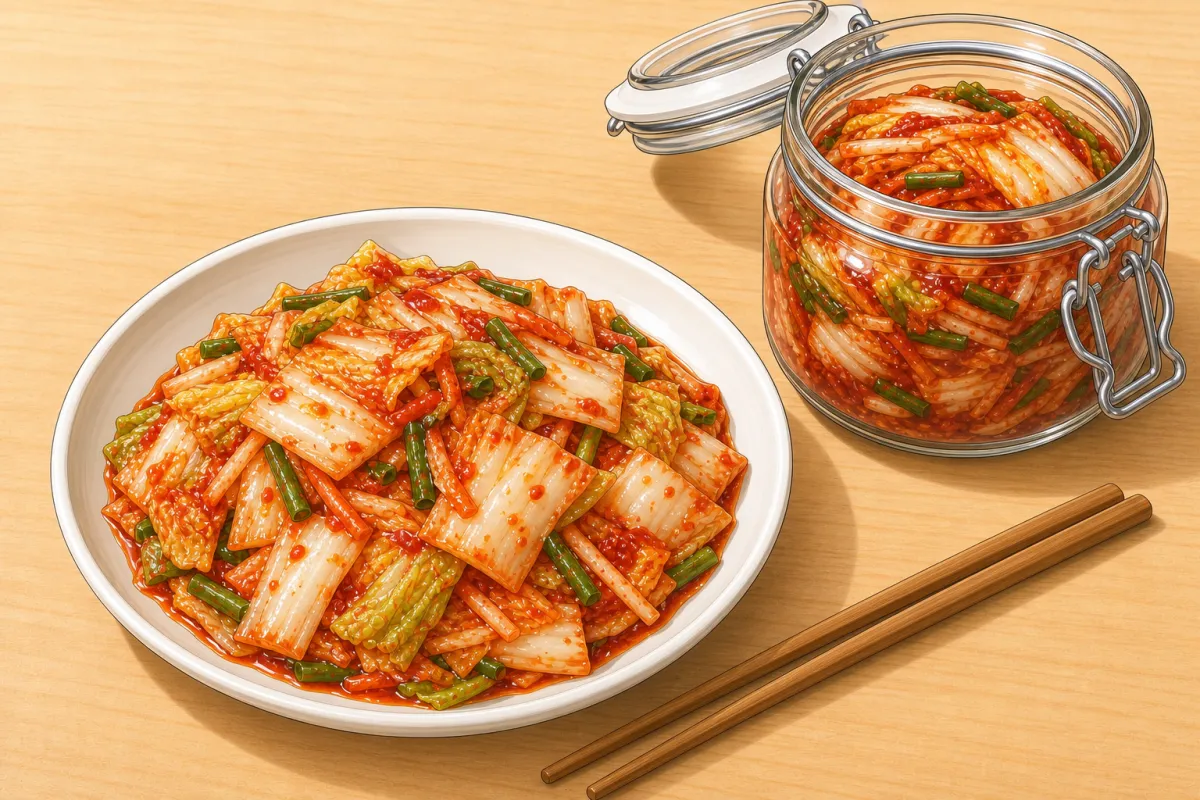
A Korean cookbook recipe: the cabbage is brined, salted for 12 hours under a weight, rinsed, then filled leaf by leaf from the middle out with a gochugaru filling and wrapped in its own outer leaves. Your additions go into the filling: dried baby anchovies and sakura shrimp chopped with a knife, and pear juice squeezed through cheesecloth.
Mise en place — set out in the order it goes in
 Salted cabbage halvesrinsed, drained 1 hStep 6
 Outer leaveskept from step 1, for wrappingStep 6
 Daikon + green onion0.3 cm matchsticks · 3 cm lengthsStep 5
 Your additions
- chopped anchovies
- chopped shrimp
- pear juice
 Garlic + ginger juiceStep 5
 Gochugaru1 cupStep 5
 Sauces + sugar
- anchovy sauce
- shrimp sauce
- kelp stock
- sugar
Prep order — what happens when, and what overlaps
h:mm
0:002:004:006:008:0010:0012:0014:0016:00
Brine, outer leaves off, halve 15 min
Salt between the leaves 15 min
Pressed, cut-side up (7 h) 7 h
Pressed, cut-side down (5 h) 5 h
Rinse in cold water 15 min
Drain in a colander (1 h) 1 h
Cut daikon + onion, prep additions 25 min
Mix the filling, rest 30 min 30 min
Fill from the middle out, wrap 30 min
Pack the jar 10 min
Bowl / counterBoardHands-off
In winter the first salting is 12 h instead of 7 h. Then 5–7 days in the fridge before serving.
Step by step
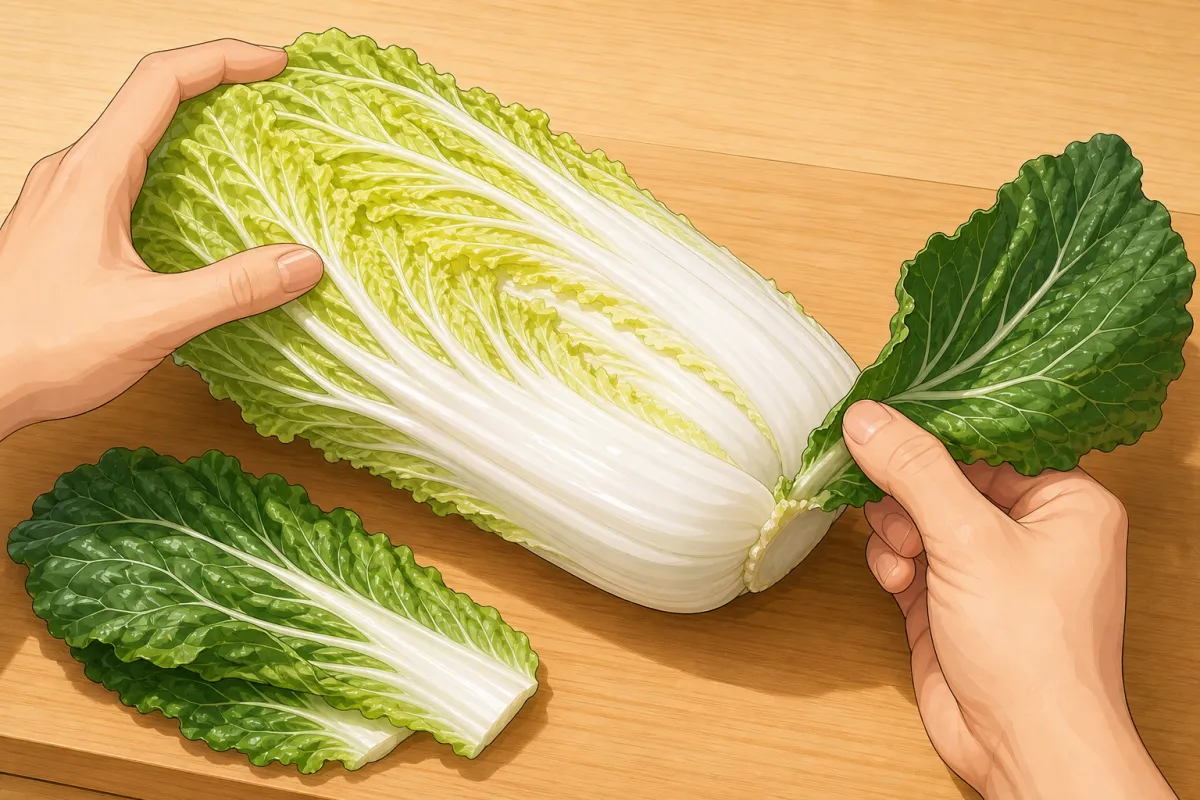
Peel off the outer leaves and keep them — they wrap the kimchi at the end. 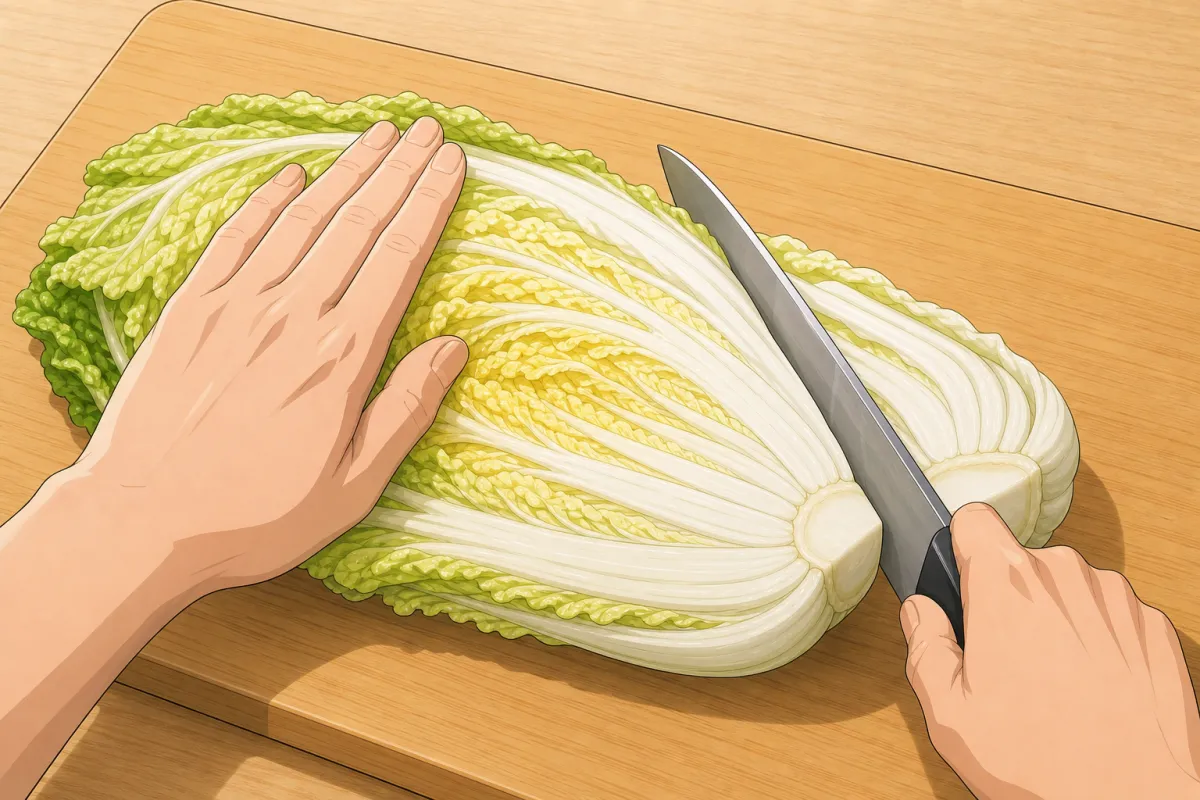
Cut the cabbage in half lengthwise. 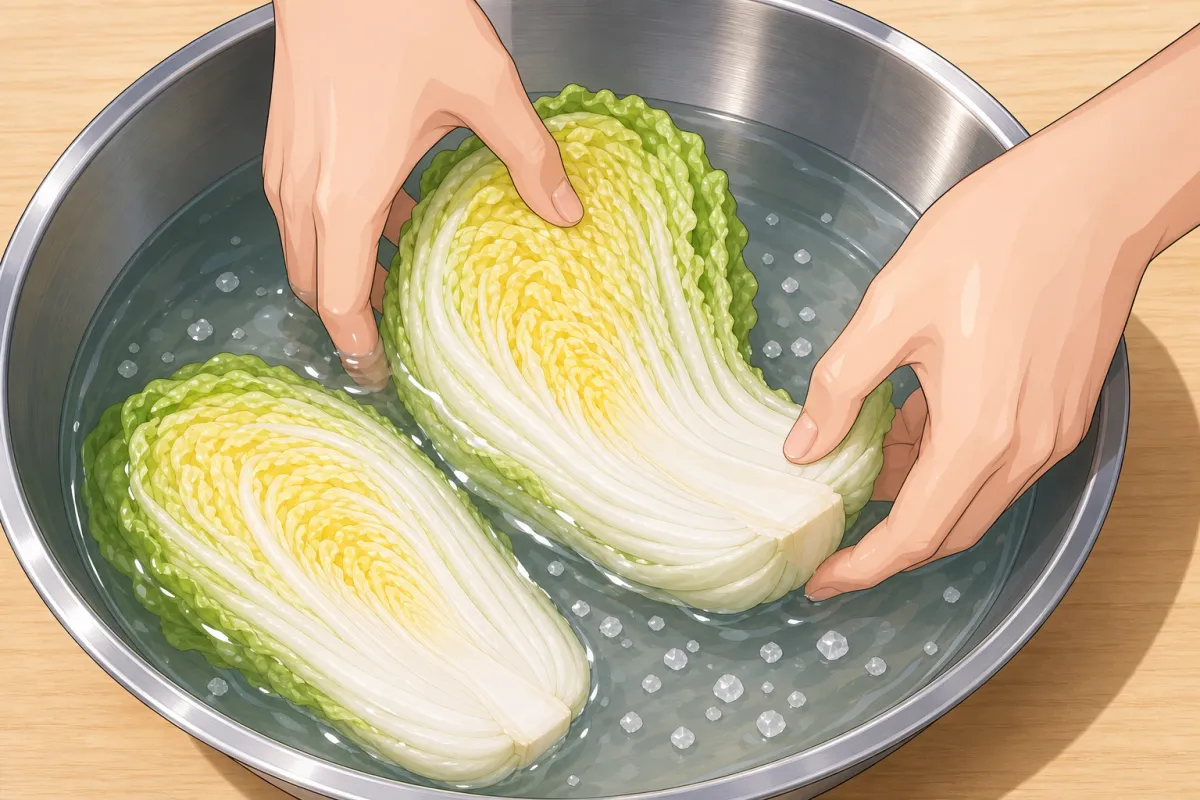
Dunk the halves in the brine. 1Brine and halve
~15 minFor this step
- Napa cabbage1 head (~2.5 kg)
- Coarse salt, for the brine1 cup (200 ml)
- Water2 l
- Stir 1 cup of coarse salt into 2 l of water in a bowl big enough to hold half a cabbage.
- Peel off the outer leaves and keep them — they wrap the kimchi in step 6.
- Cut the cabbage in half lengthwise and dunk the halves in the brine.
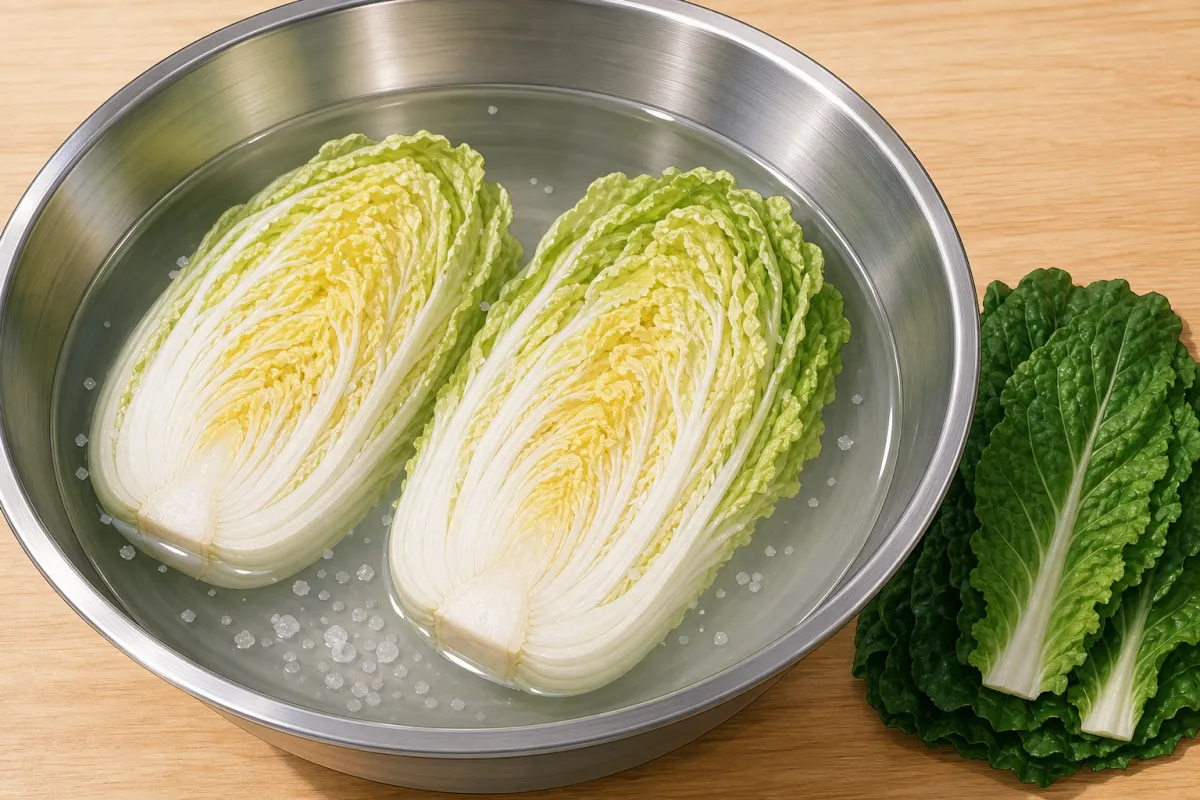
Should look like this 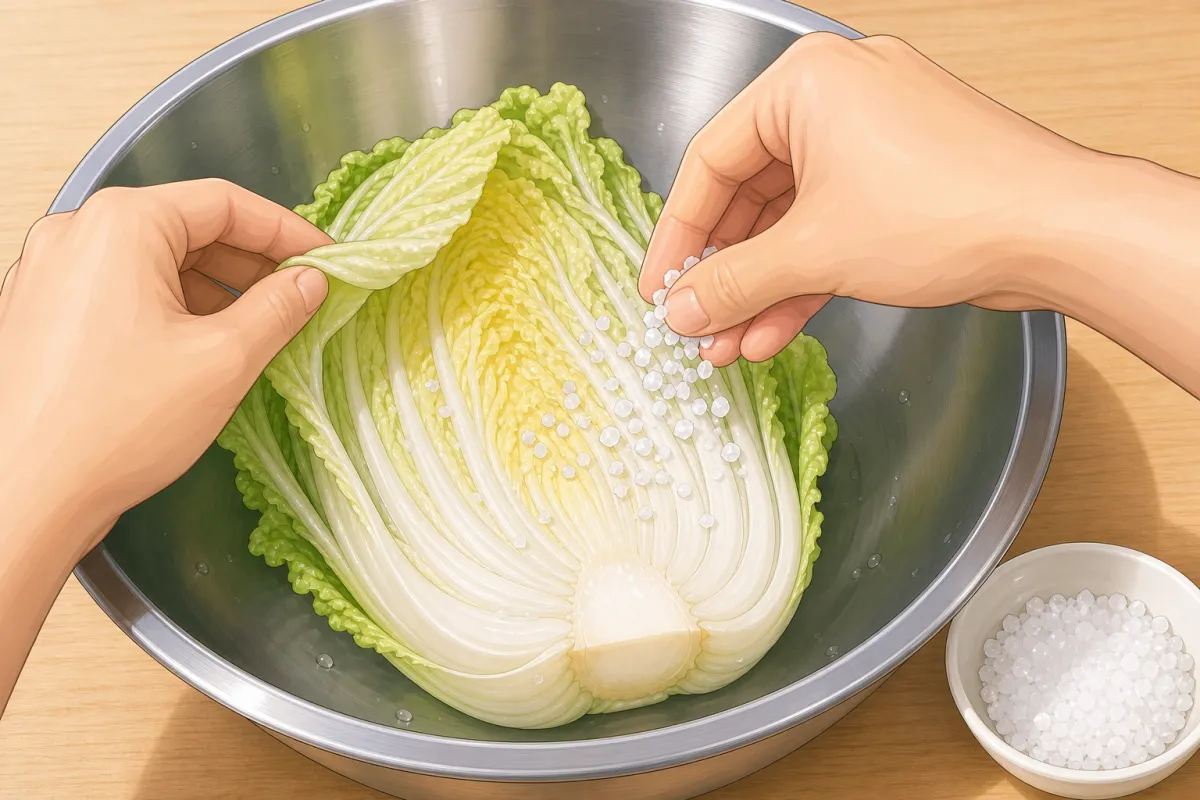
Lift the leaves and sprinkle coarse salt between them, mostly on the thick white stems. 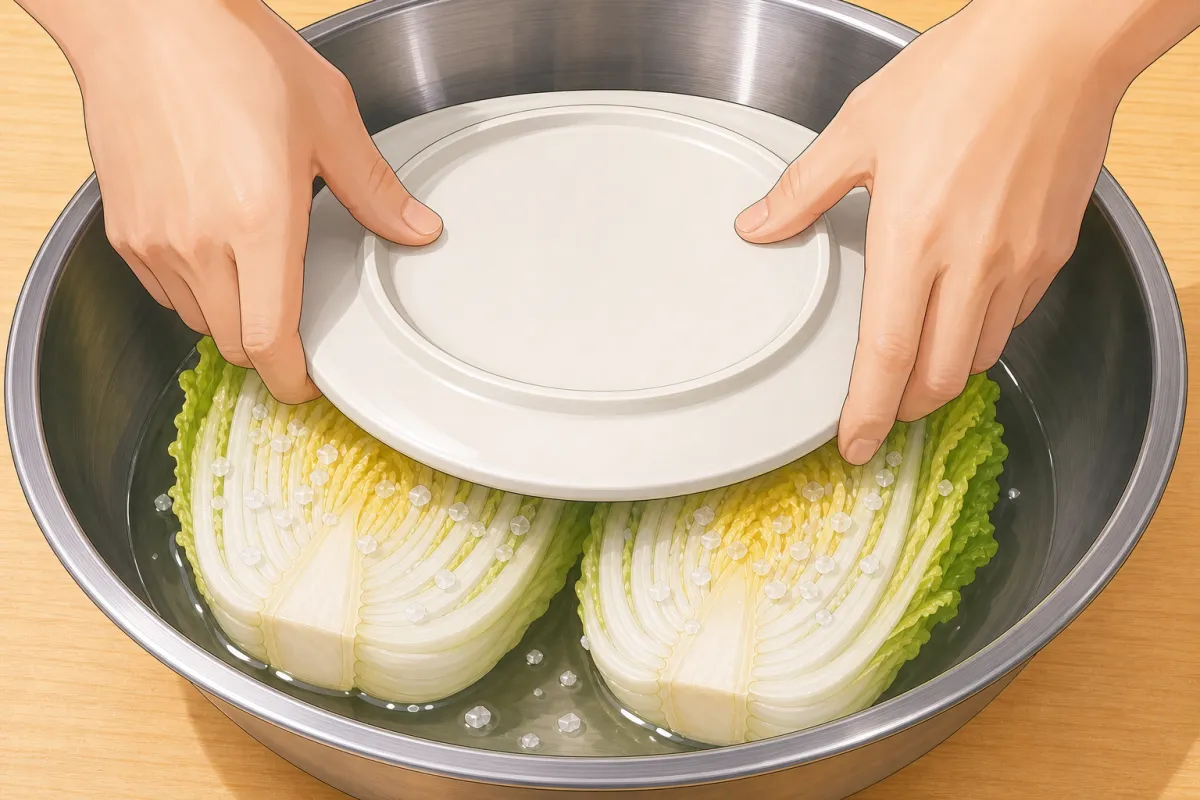
Press them under a heavy plate — 7 hours cut-side up, then 5 hours cut-side down. 2Salt and press
12 h (17 h in winter)For this step
- Coarse salt, between the leaves1 cup (200 ml)
- Take the halves out and work the second cup of coarse salt in between the leaves, mostly onto the thick white stems.
- Leave them cut faces up for 7 hours (12 in winter), then flip them face down for 5 hours more.
- Keep weight on them throughout — a heavy plate or board, or a bag of water — so the salt gets in evenly.
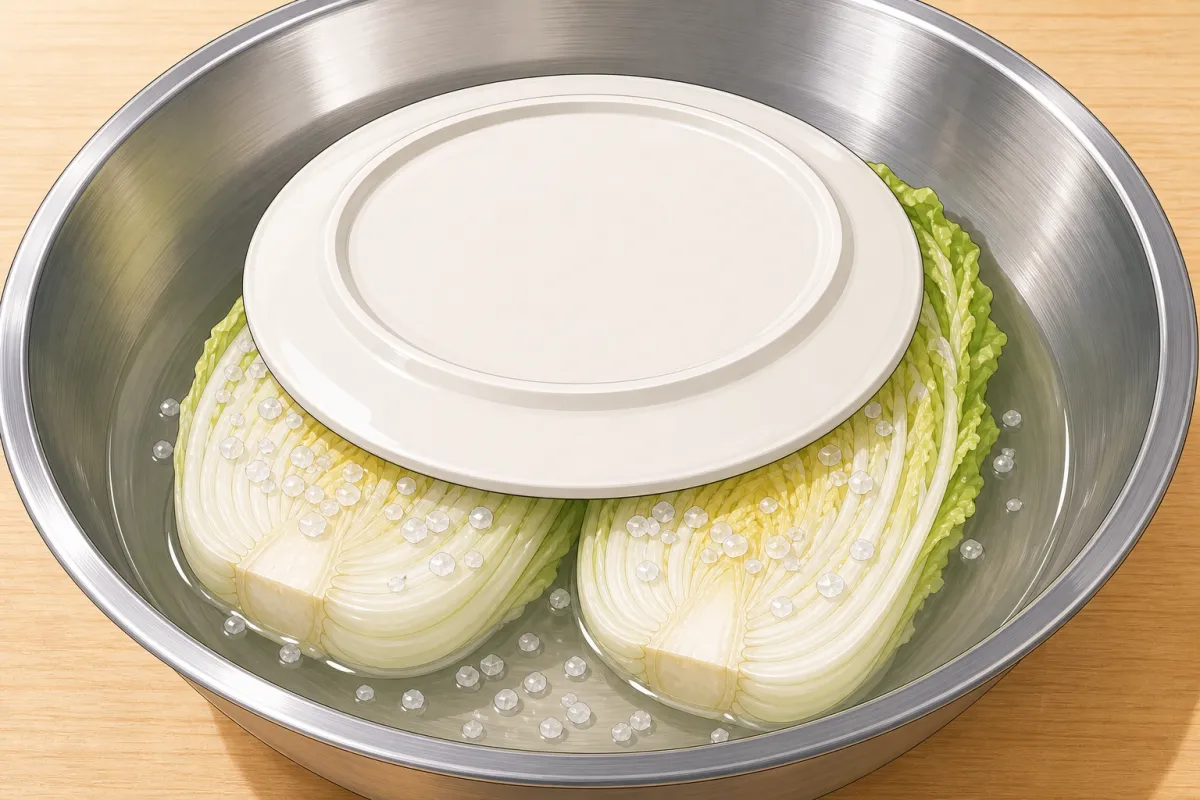
Should look like this 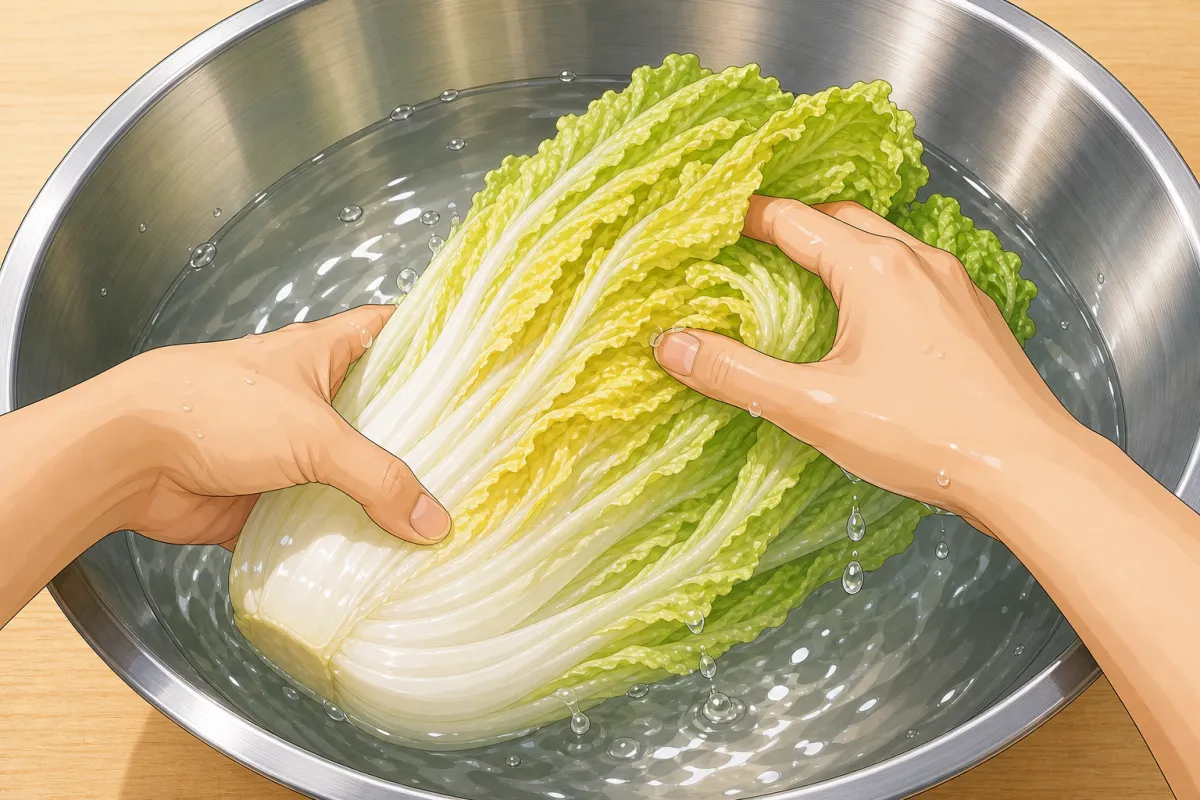
Rinse thoroughly in cold water, opening the leaves. 3Rinse and drain
~1 h- Wash the salt off under cold water, opening the leaves so it reaches inside.
- Stand the halves in a colander and let them drip for about an hour.
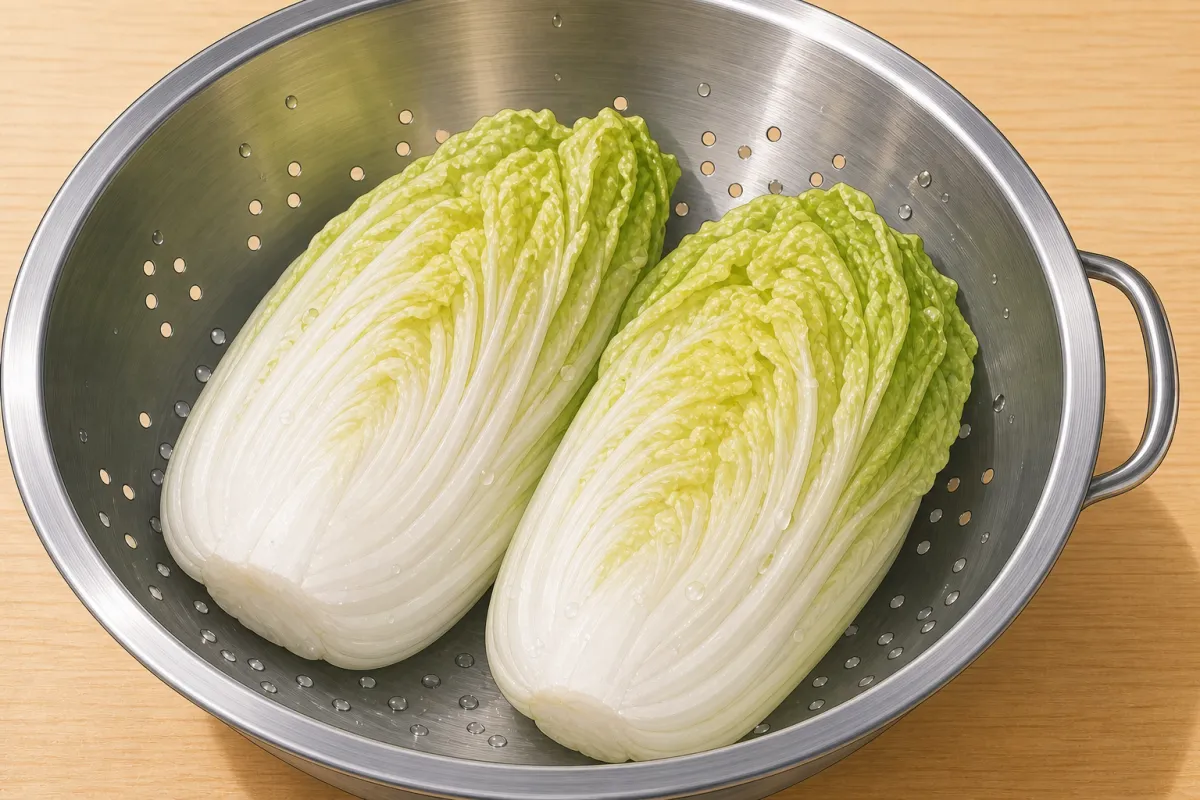
Should look like this 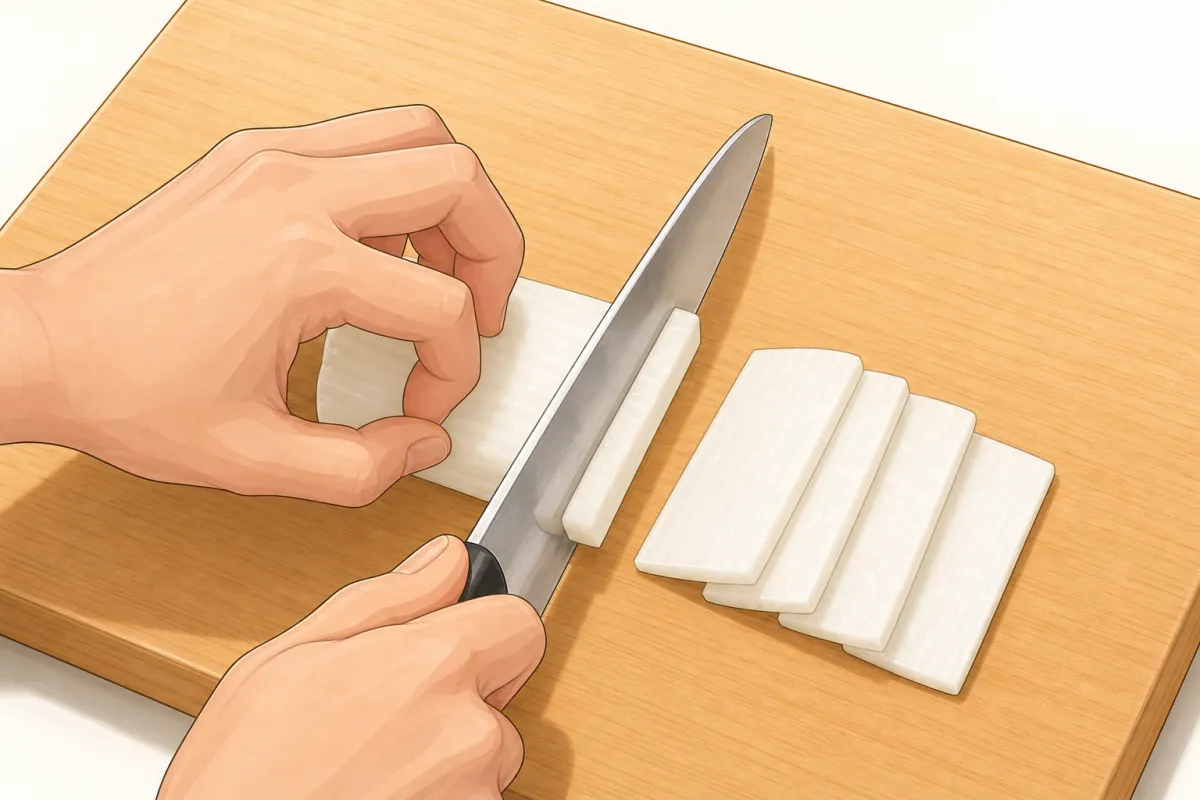
Daikon: slice into thin 3 mm planks. 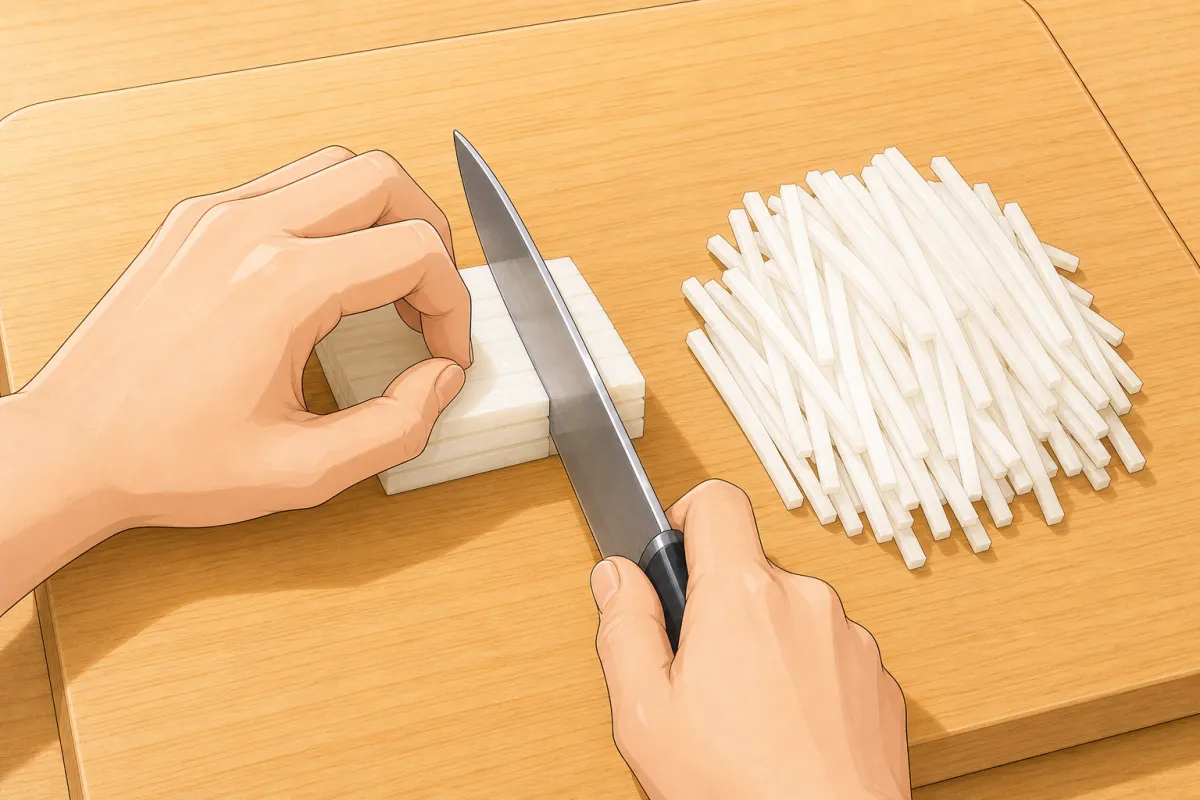
Stack a few planks and cut them into 0.3 cm matchsticks. 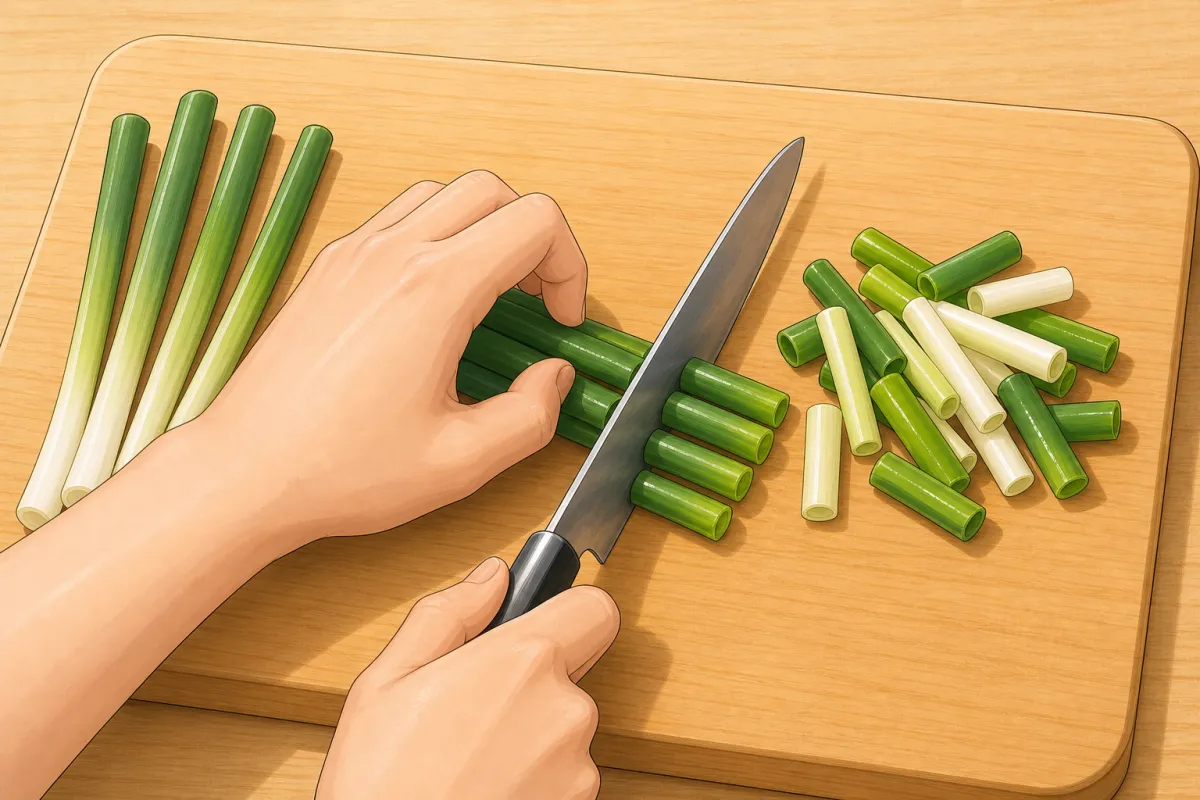
Green onions: line them up and cut into 3 cm lengths. 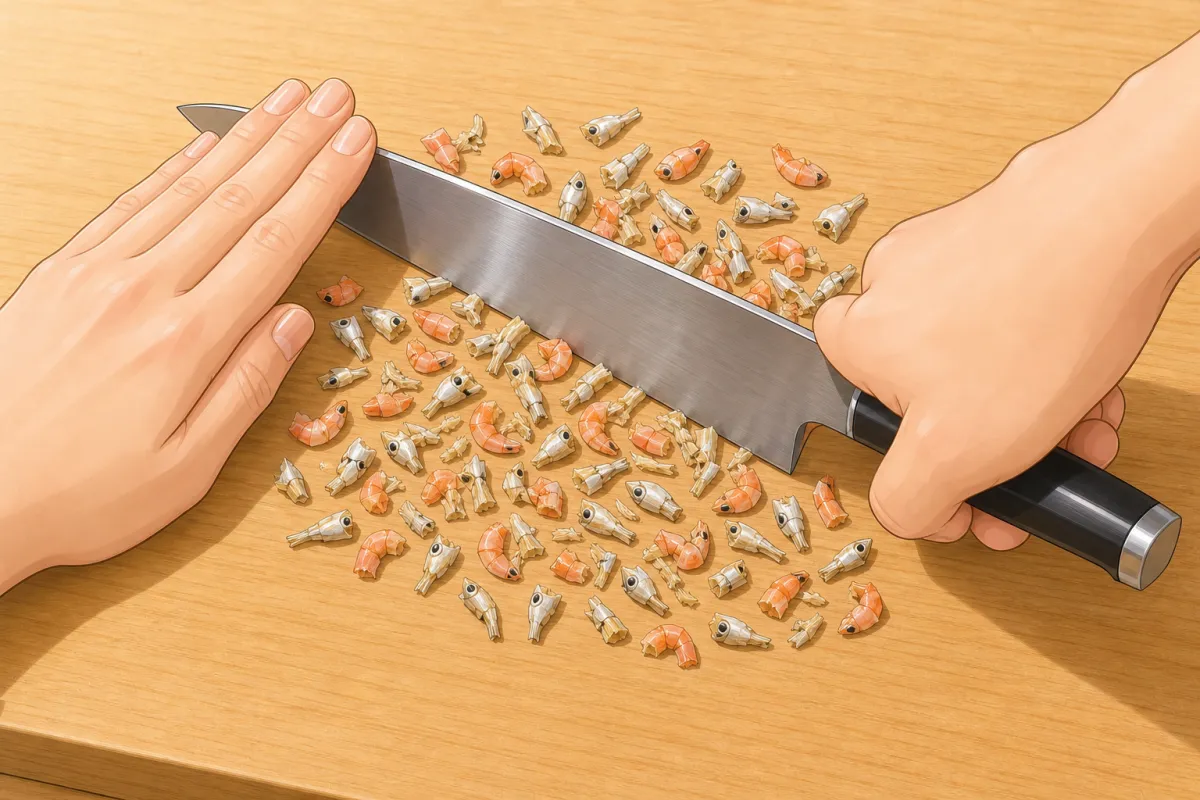
Your additions: chop the dried anchovies and shrimp finely with a knife. 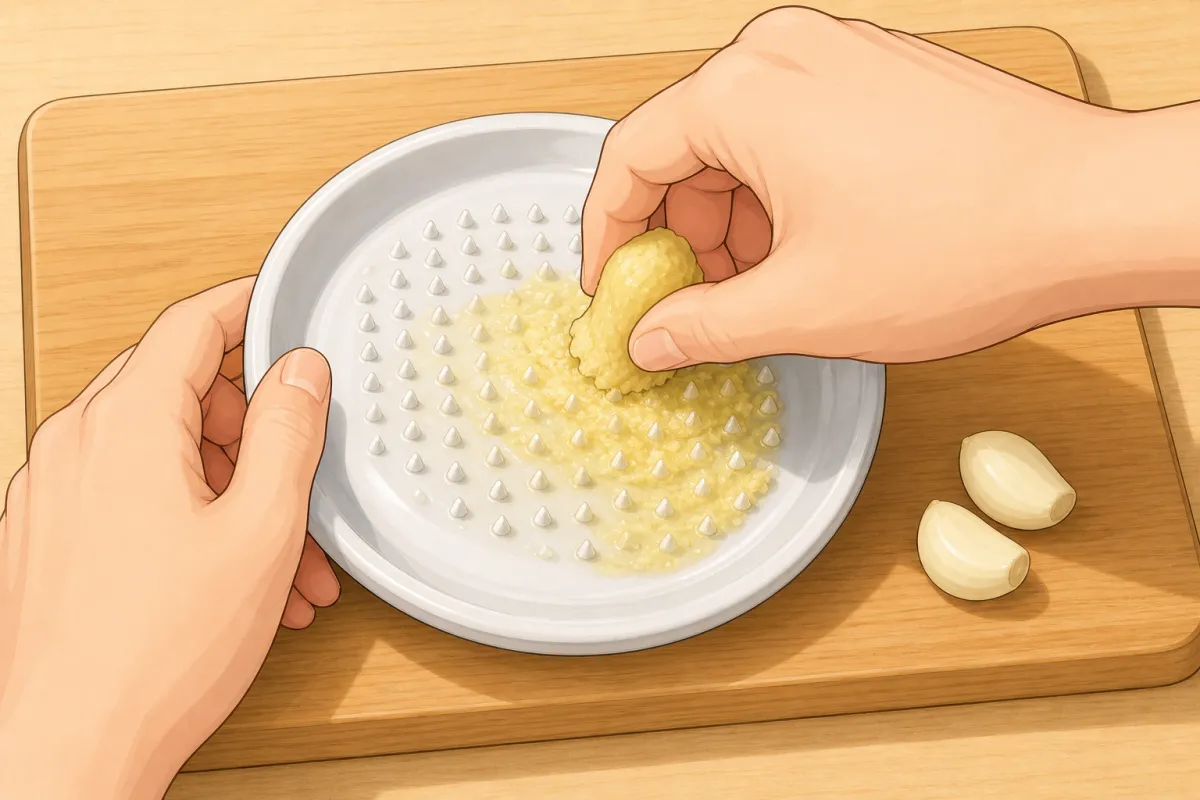
Grate the garlic and ginger on a ceramic grater, rubbing in small circles. 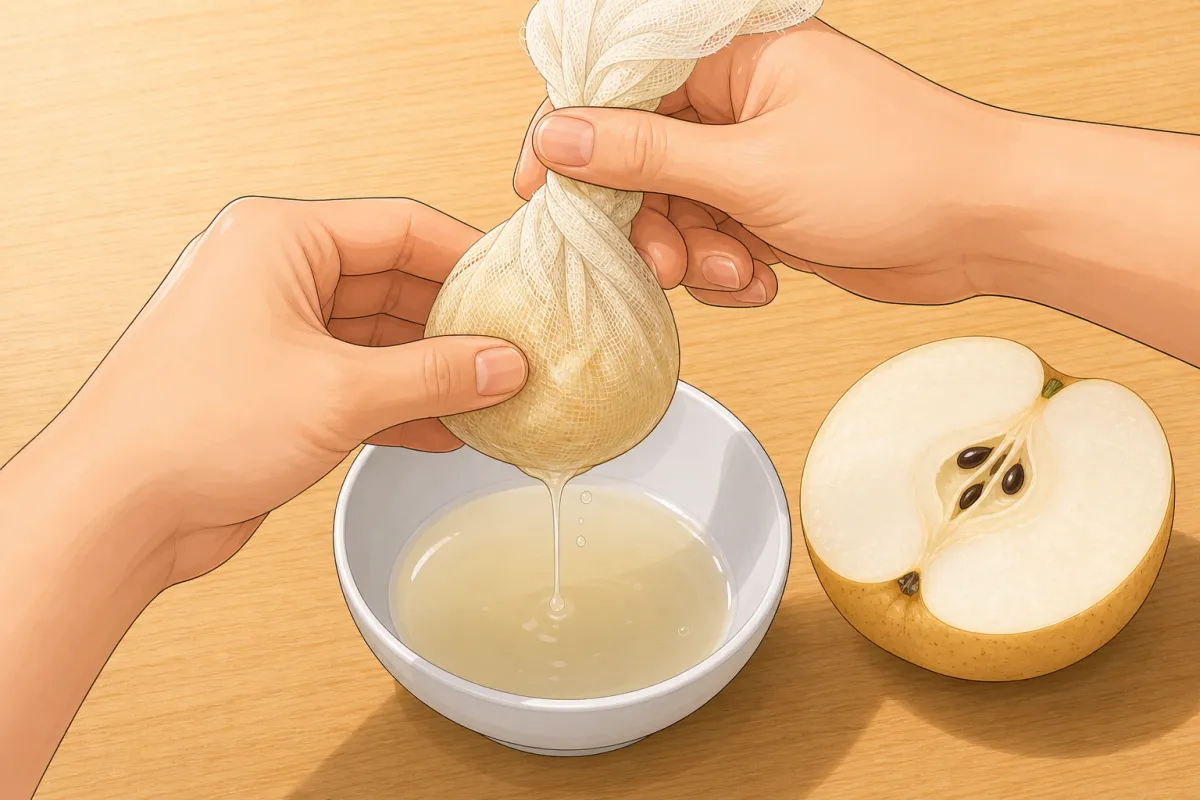
Squeeze the grated pear (and ginger) through cheesecloth — the juice is what you want. 4Prepare the filling
~25 minFor this step
- Daikon200 g
- Green onions50 g
- Garlic2 tbsp
- Ginger juice1 tbsp
- Asian pear½ (~150 g)
- Slice the daikon into thin 0.3 cm matchsticks; cut the green onions into 3 cm pieces.
- Your additions — chop finely with a knife:
- dried baby anchovies a small handful (~10 g) — enough to taste a little
- dried sakura shrimp a small handful (~5–10 g) — the same idea
- Crush or grate the garlic — a ceramic grater is best, a fine metal one works too.
- Grate the ginger and squeeze it through cheesecloth for the ginger juice.
- Grate the Asian pear, put it in cheesecloth and squeeze out the juice — the juice is what you want.
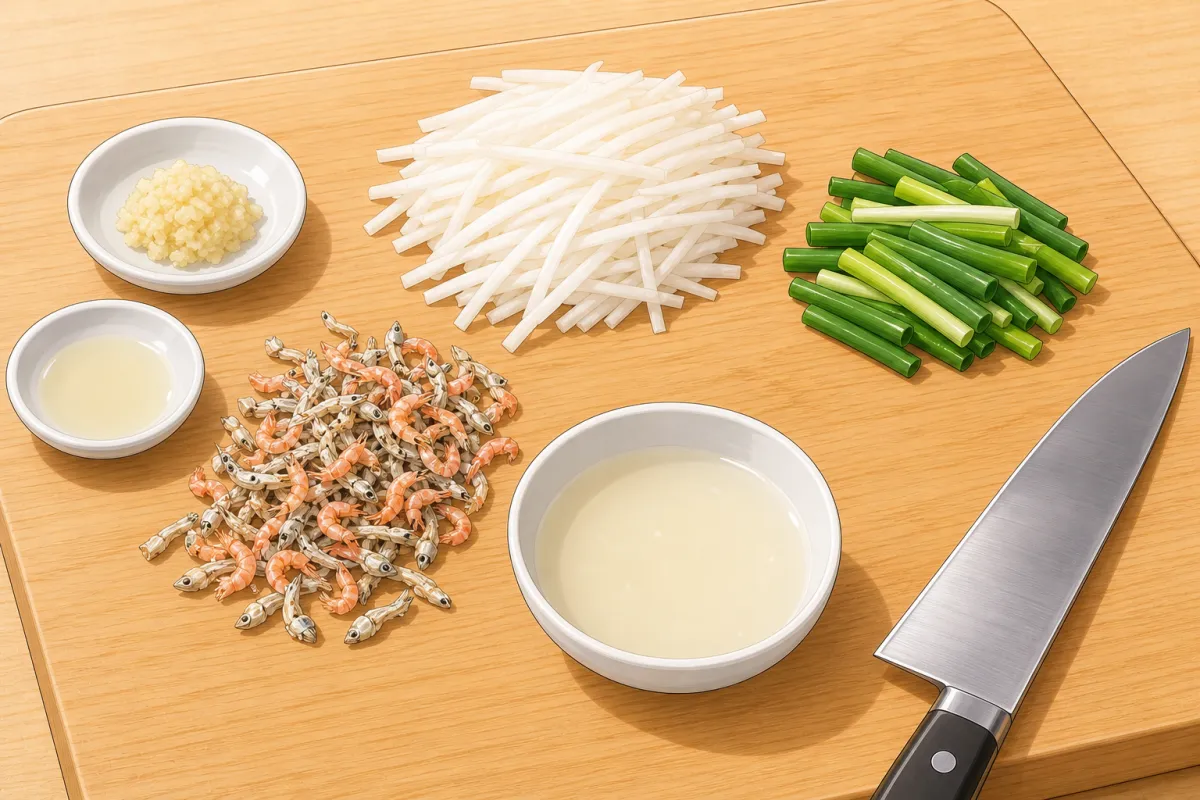
Should look like this 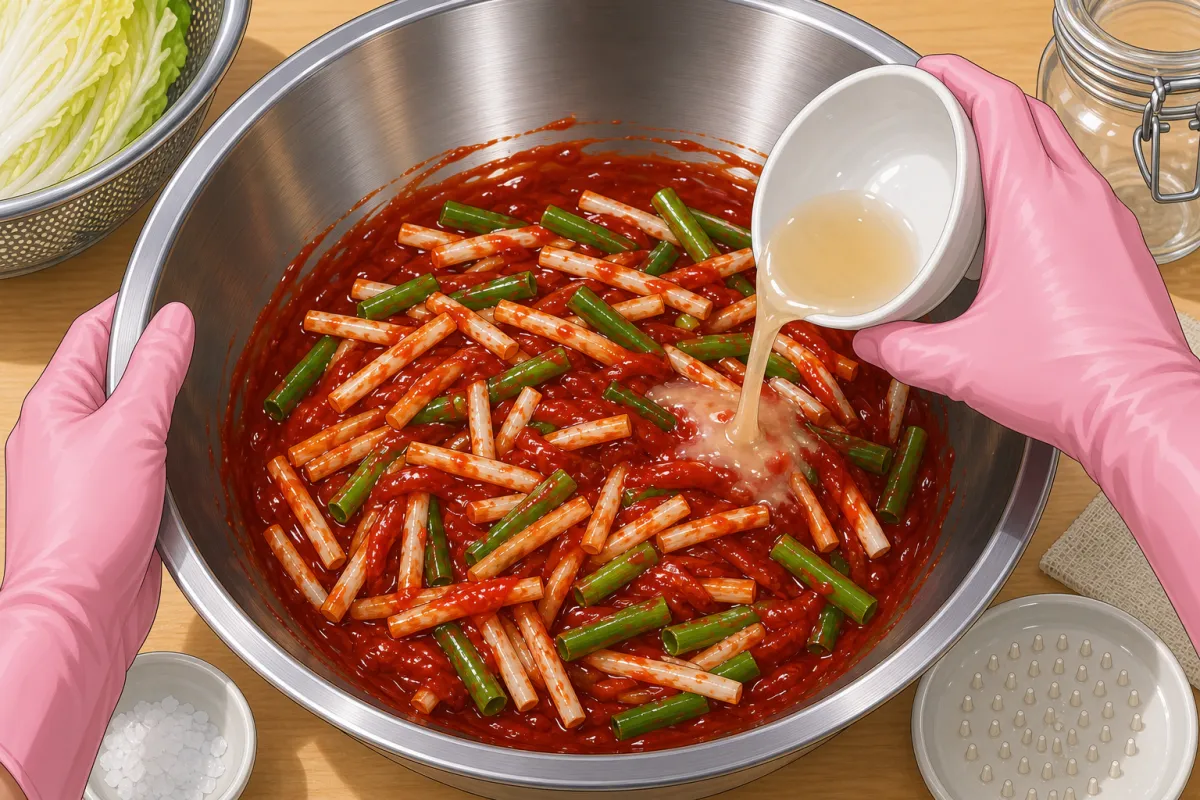
Gloves on: mix the gochugaru, sauces, sugar and stock with everything from step 4. 5Mix the filling
~5 min + 30 min- Gloves on. Mix everything from step 4 with:
- gochugaru (Korean chilli powder) 1 cup (200 ml)
- salted anchovy sauce 100 ml
- salted shrimp sauce 3 tbsp
- sugar 4 tbsp
- kelp (kombu) stock 100 ml
- Let it stand about 30 minutes so the flavours come together.
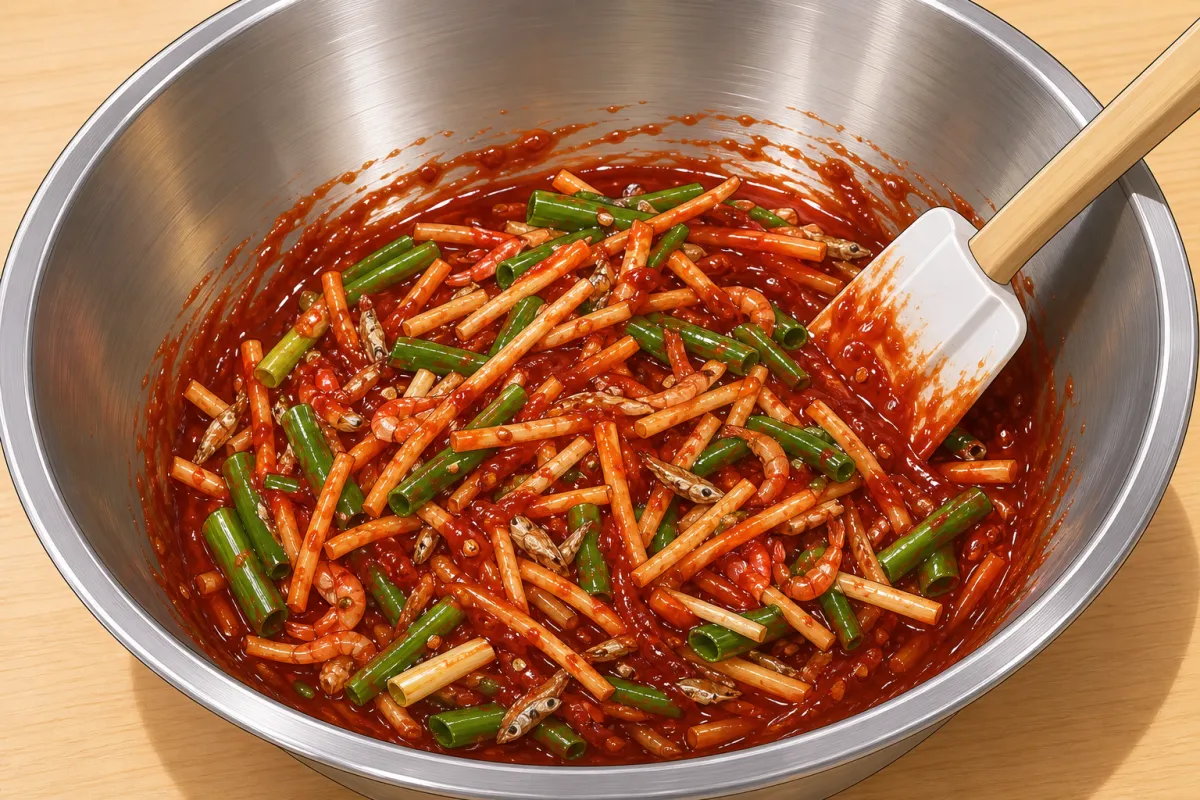
Should look like this - Gloves on. Mix everything from step 4 with:
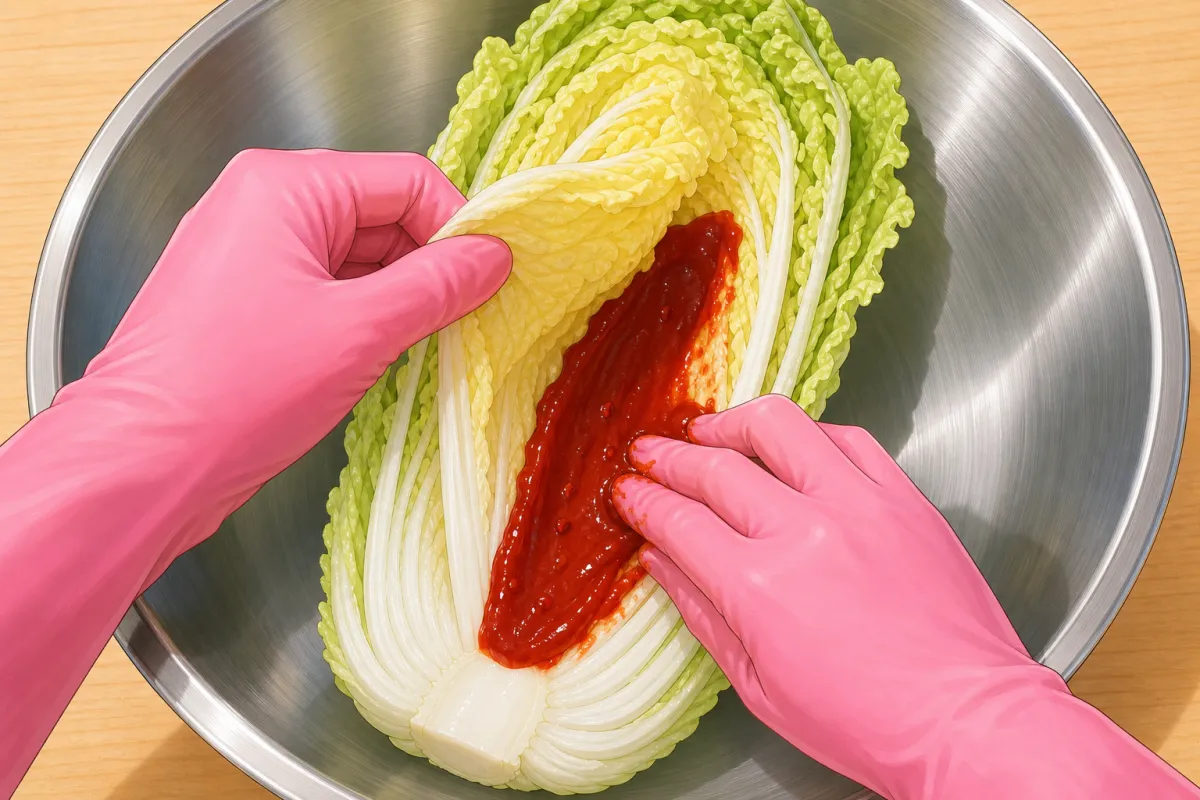
Start at the middle: lift the innermost leaf and smear filling down to the core. 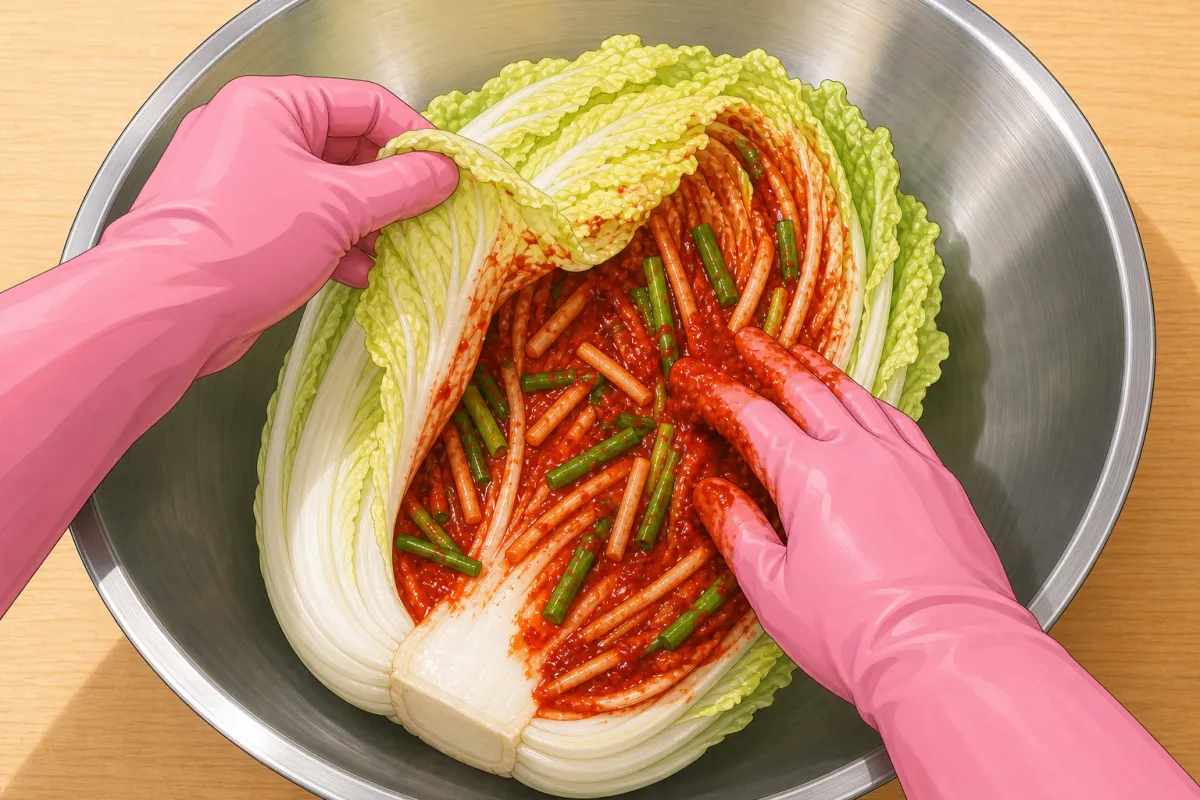
Lay it back, lift the next leaf out from the middle, repeat. 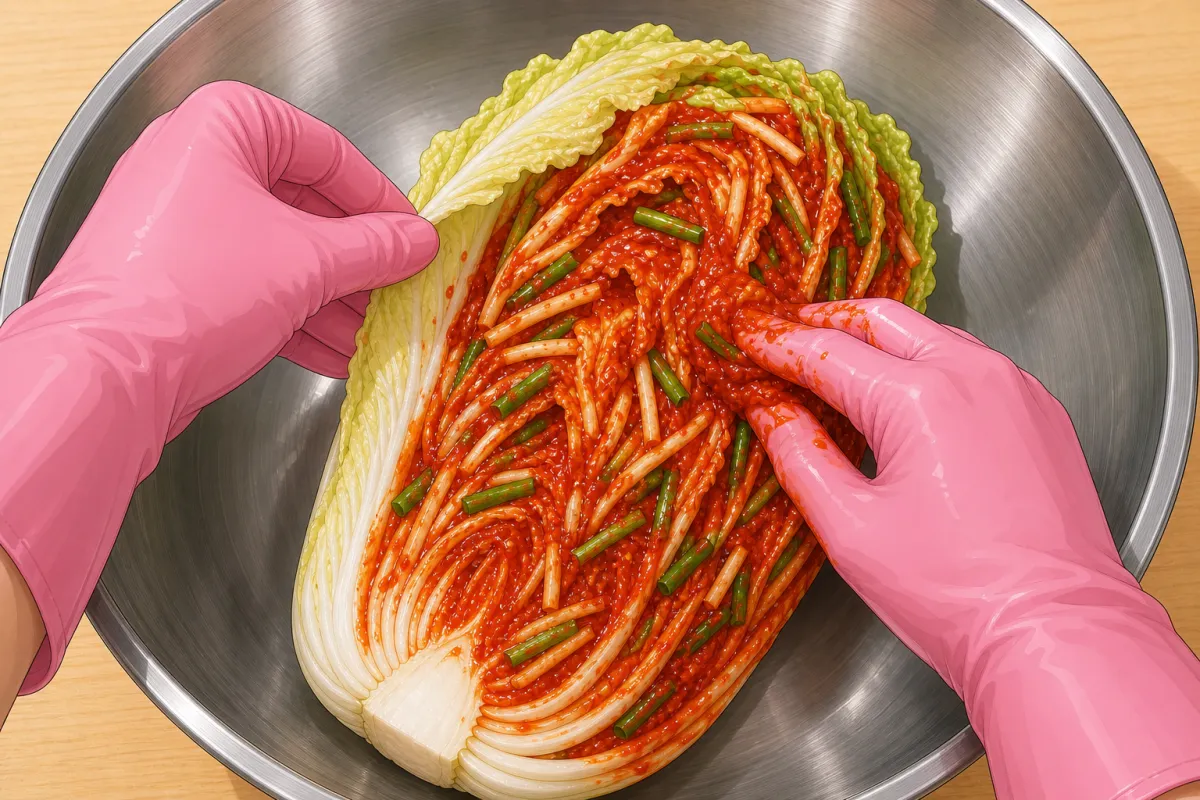
Work outward until the outer leaves are done. 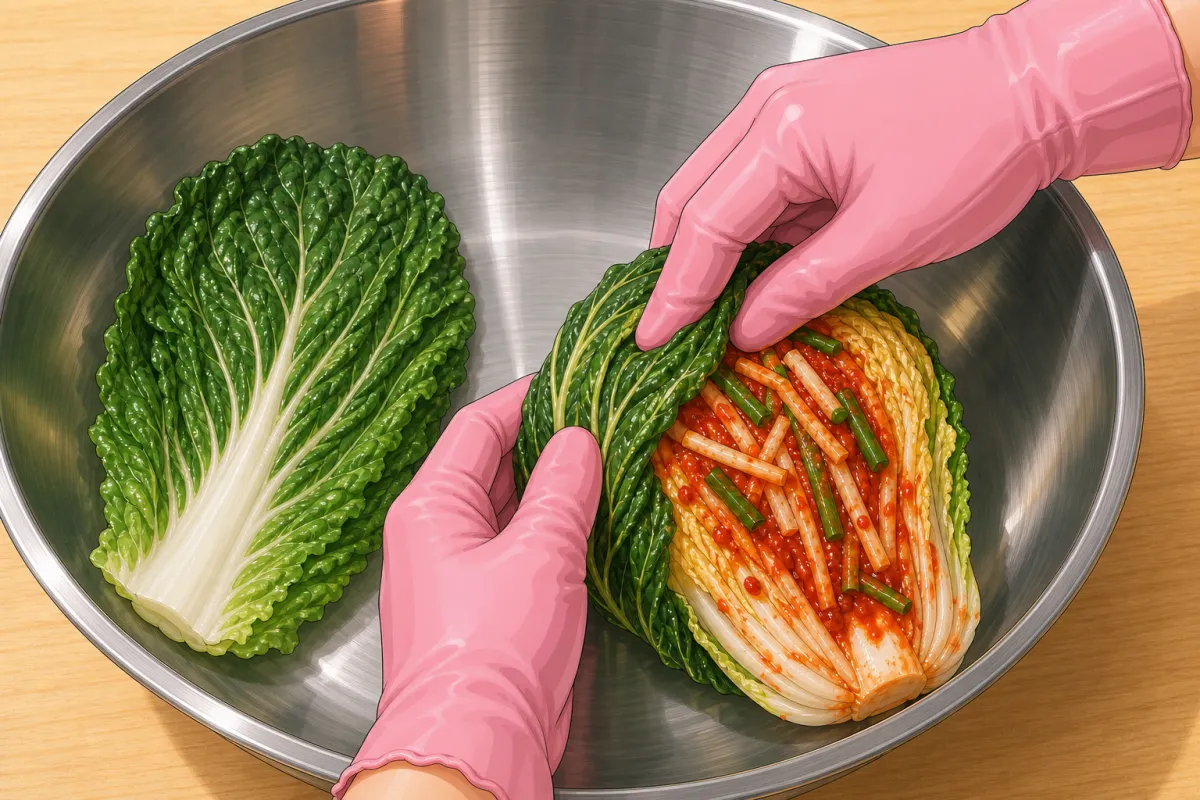
Wrap each half in the outer leaves you kept. 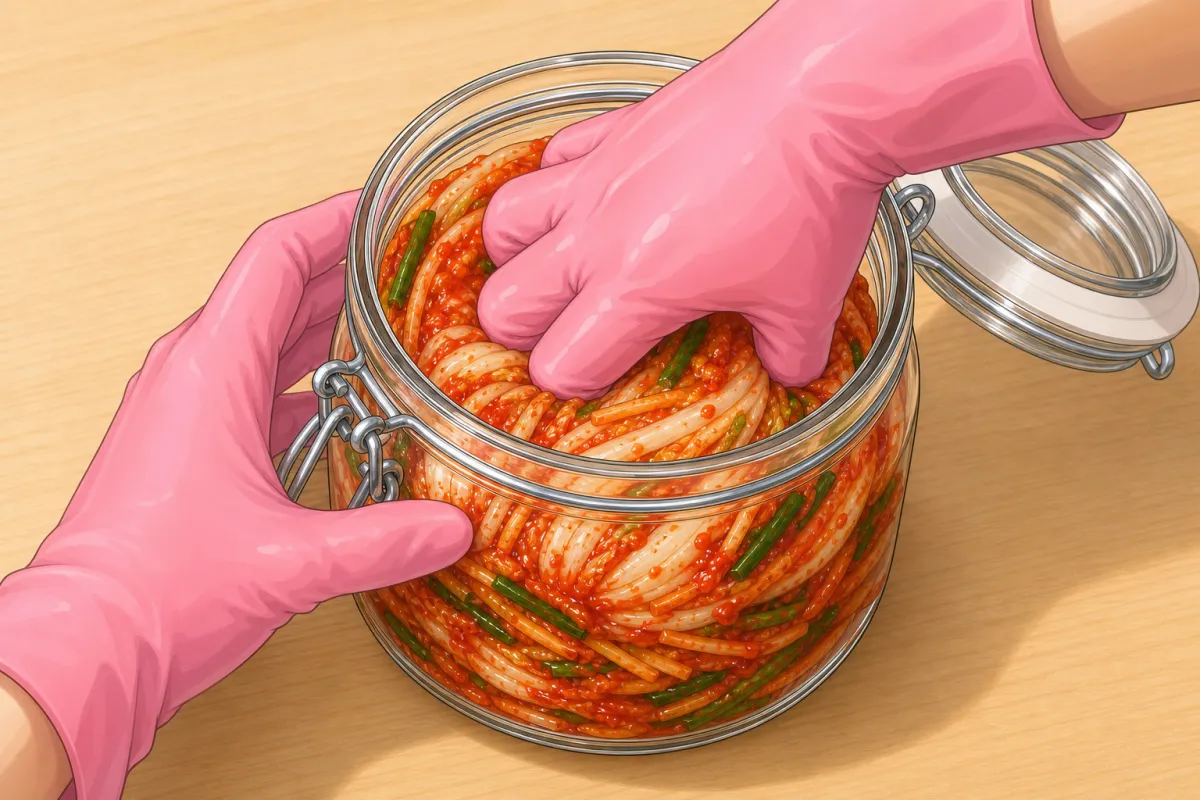
Pack tightly into an airtight jar, then 5–7 days in the fridge. 6Fill, wrap and pack
~40 min, then 5–7 days- Start at the middle: lift the innermost leaf next to the core and smear filling over it right down to the core.
- Lay it back, lift the next leaf out from the middle and repeat — work outward until every leaf is coated.
- Fold the outer leaves you saved around each half like a parcel, so none of the filling escapes.
- Press the parcels into an airtight jar and give them 5–7 days in the fridge before eating.
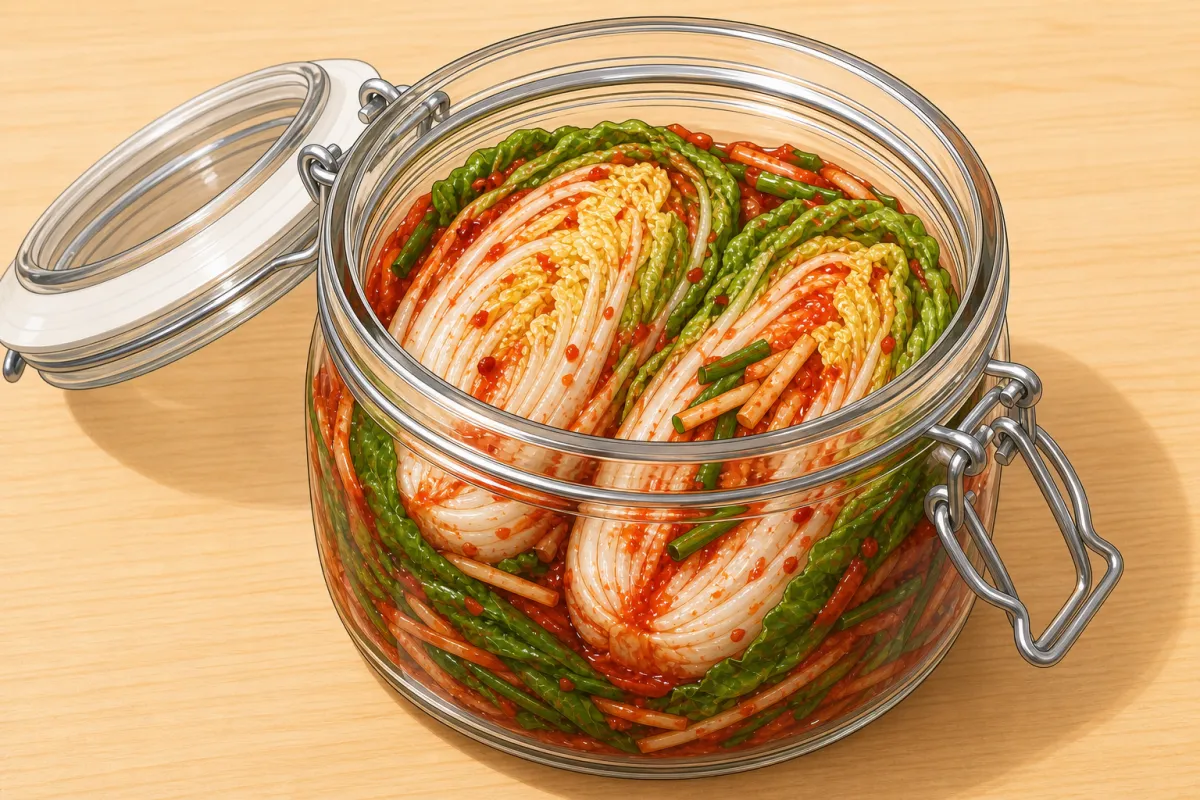
Should look like this