Lower back machine (lumbar extension)
- Pin-loaded machine
- Back extension
- 8–15 reps
- Beginner-friendly
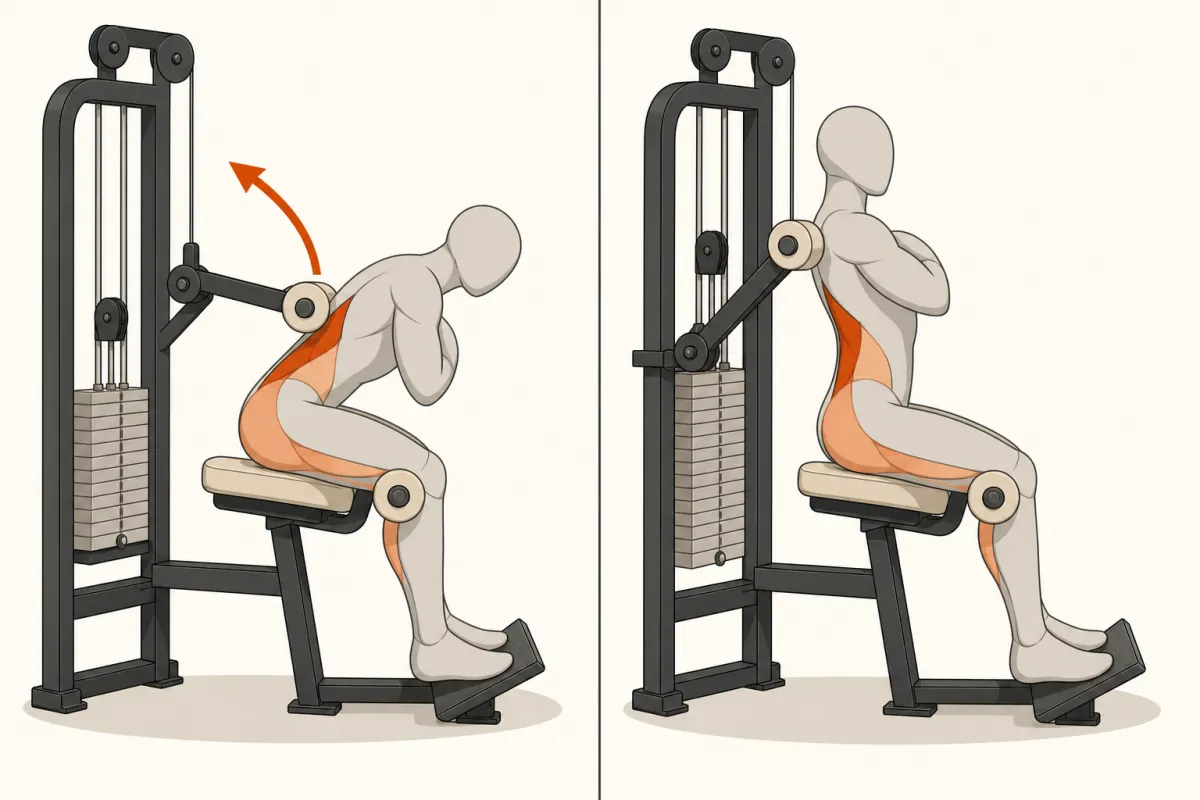
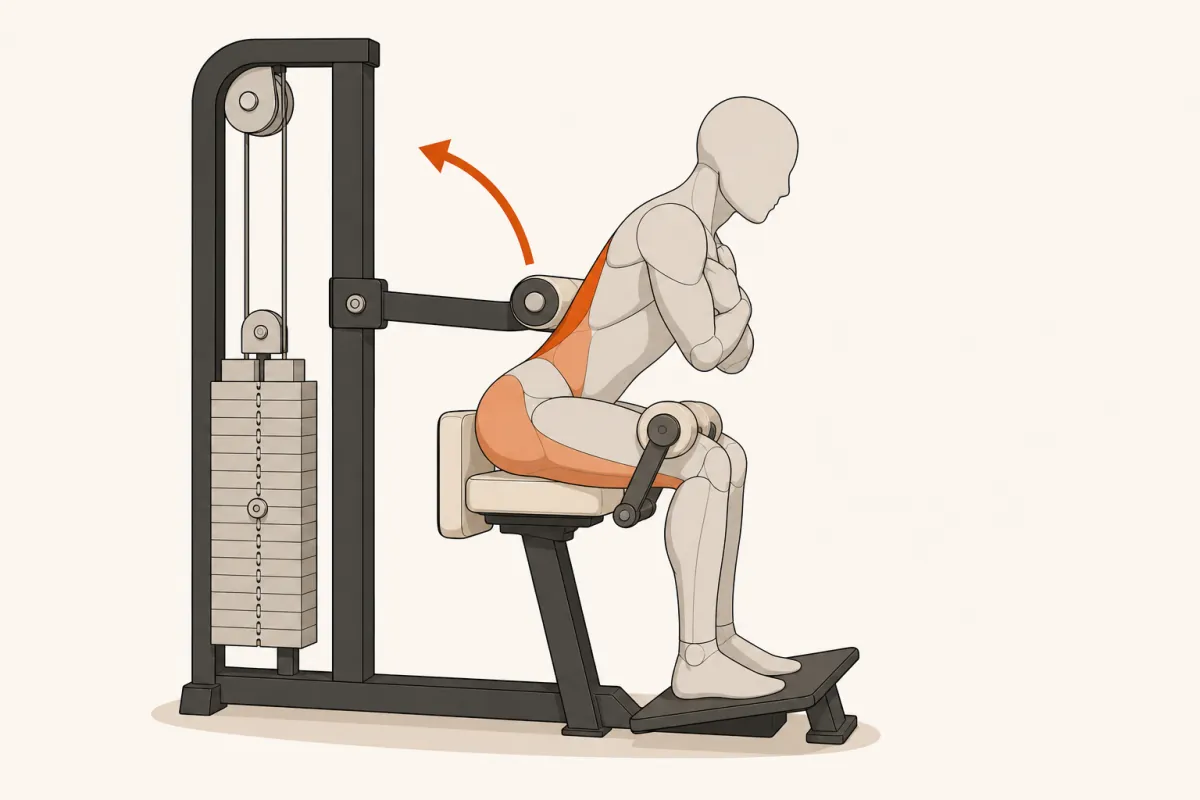
Generated illustration — follow the cues.
Setup
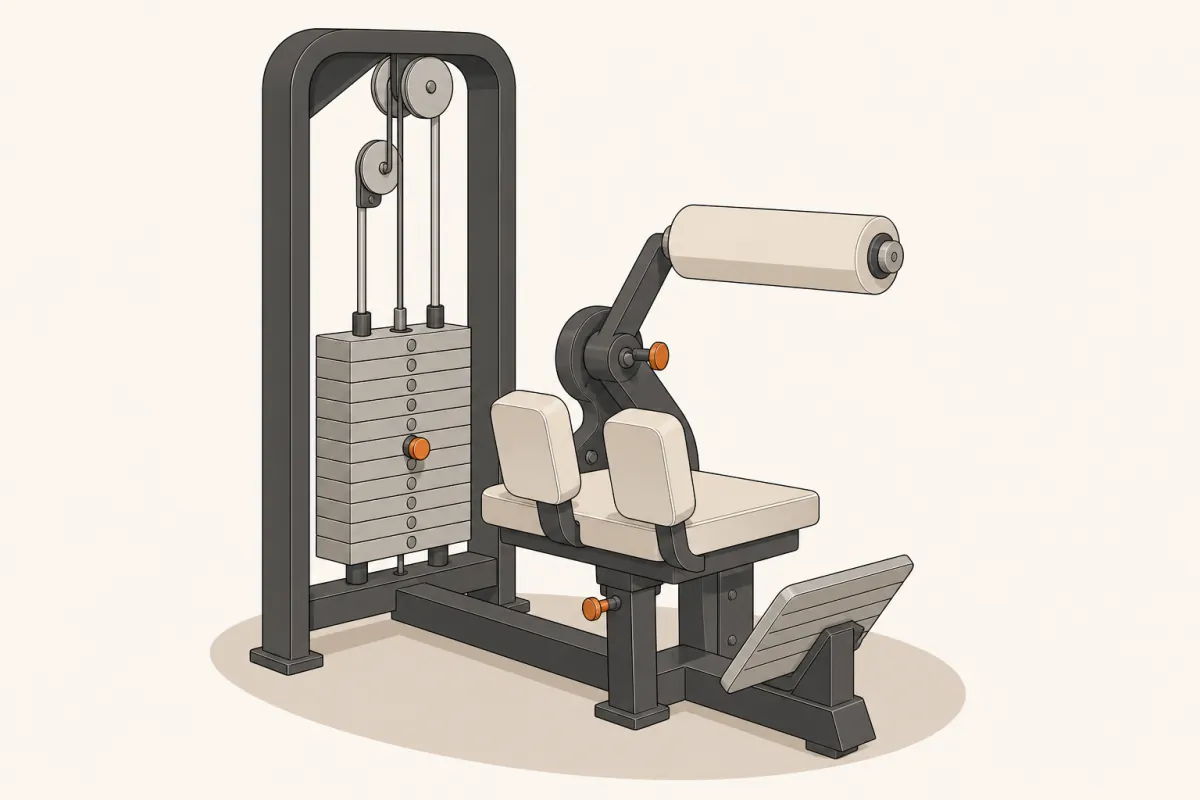
Sit with your hips back against the seat so the pelvis lines up with the machine's pivot, put your feet on the footrest step that fits your leg length and tighten the thigh or hip restraint if there is one; the back pad sits across your shoulder blades. Set the start-position lever to a range you can move through without pain.
Cues
- Lock the pelvis: press the feet into the footrest and the thighs into the pads so the lower back, not the hips, does the work.
- Cross your arms on your chest or hold the handles lightly; don't pull with them.
- Extend the trunk back smoothly until you are upright or just past it, no further.
- Move slowly: about 2 s back and 3–4 s forward, with no bounce at either end.
- Exhale as you push back, inhale as you return.
- Keep the chin neutral; the head moves with the trunk.
- Start light: for the first weeks stop 2–3 reps short of failure. Muscle effort is fine; sharp or leg-radiating pain means stop.
Common mistakes
- Throwing the trunk back with momentum and slamming into the end of the range.
- Arching hard at the end: finish upright, not hyperextended.
- A loose restraint or feet off the footrest, so the pelvis tilts and the hips do the work.
- Pushing through sharp, burning or leg-radiating pain.
- Ego loading: a stack you can only move with a jerk.
- Throwing the head back or jutting the chin forward during the rep.
Muscles
- Main: Spinal erectors
- Helping: Quadratus lumborum, Gluteus maximus, Hamstrings
Alternatives
Machine busy or missing? Closest first.
Pick your gym to see which of these it has: Gyms
Warm-up
| Set | Load | Reps |
|---|---|---|
| Warm-up 1 | 10 kg | 8 |
| Working sets | 20 kg | 8–15 reps |
Example for the planner's first working load (20 kg, an 80 kg beginner). The train page builds the same ramp from your own working weight. Before it: 5 min of easy cardio (bike, rower or brisk incline walk) until you are warm and breathing a little faster, then lighter ramp sets before the first working set of each big exercise.
Facts
- Equipment
- Pin-loaded machine
- Movement
- Back extension
- Swap group
- Back extensions
- Load step
- 5 kg
- Rep range
- 8–15 reps
- Difficulty
- Beginner-friendly
- Support
- You stabilise yourself
- Lower-back load
- Moderate
- Typical start
- 25 kg (untrained 80 kg man)
Also called: Lower Back (Technogym Selection / Element) · Back Extension (Life Fitness Insignia) · Back Extension (Cybex Eagle NX) · Low Back (Nautilus One) · MedX Lumbar Extension · Abdominal/Back Extension (Precor Vitality)
Sources
- A review of the clinical value of isolated lumbar extension resistance training for chronic low back pain — PM R, 2015. doi.org/10.1016/j.pmrj.2014.10.009
- The effect of lumbar extension training with and without pelvic stabilization on lumbar strength and low back pain — J Back Musculoskelet Rehabil, 2011. doi.org/10.3233/BMR-2011-0301
- Effect of training frequency and specificity on isometric lumbar extension strength — Spine, 1990. doi.org/10.1097/00007632-199006000-00014
- Machine Back Extension Standards — Strength Level, 2026. strengthlevel.com/strength-standards/machine-back-extension/kg