Daifuku (red bean mochi)
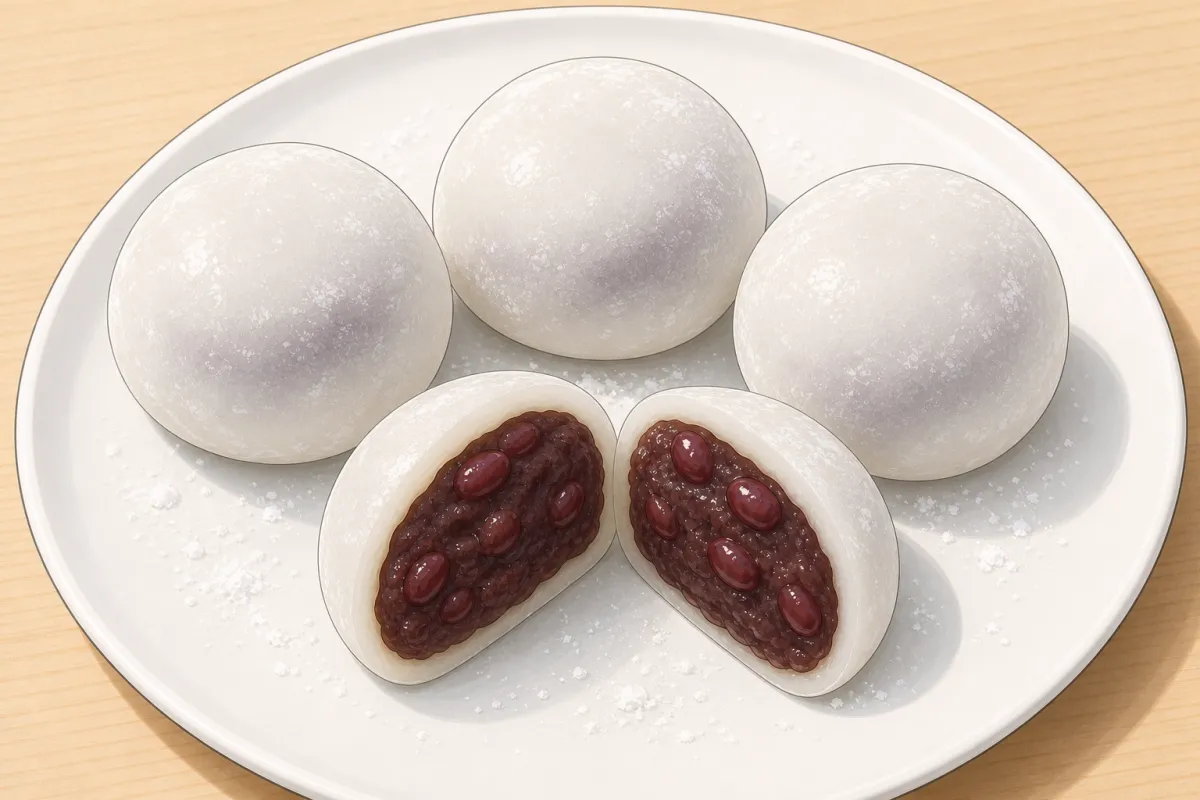
The everyday daifuku of Japanese sweet shops: a big ball of anko in a thin white mochi shell, with nearly as much filling as mochi. The mochi is shiratamako, sugar and water, cooked in the microwave in three short bursts. Chunky tsubuan or smooth koshian both work. Make them the day you eat them, because the mochi goes hard in the fridge. Strawberry, salted pea and mugwort daifuku follow the same method.
Mise en place — set out in the order it goes in
 Anko210 g, in 6 ballsStep 1
 Shiratamako + sugar100 g + 30 gStep 2
 Potato starchfor the trayStep 4
Prep order — what happens when, and what overlaps
minutes
051015202530
Roll the anko 5 min
Mix the batter 3 min
Microwave in three bursts 5 min
Divide on starch 5 min
Wrap and pinch shut 10 min
BoardBowl / counter
Step by step
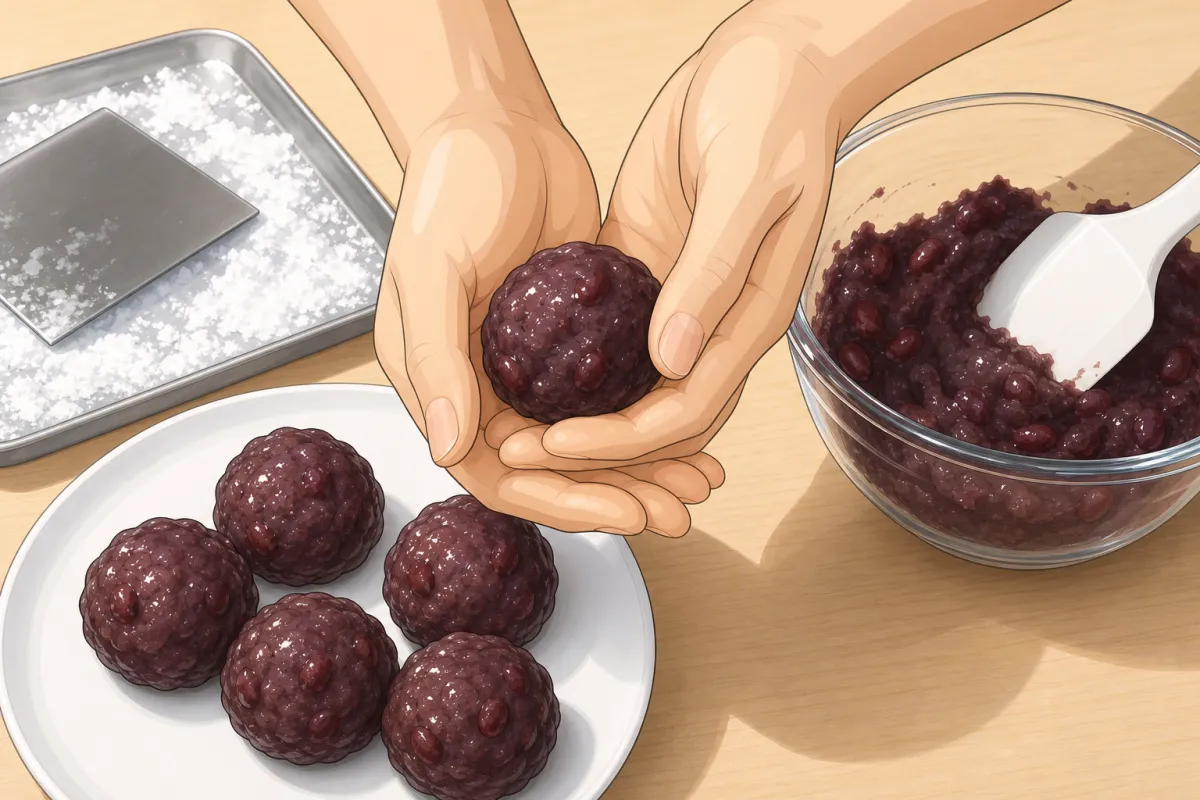
Roll each ball between your palms; firm anko wraps more easily. 1Roll the anko
5 minFor this step
- Anko (red bean paste)210 g
- Roll the anko into 6 balls of 35 g and set them on a plate in the fridge.
- If it's too soft to hold a shape, stir it in a pan over low heat for a few minutes to dry it out, then cool it. Firm anko is much easier to wrap.
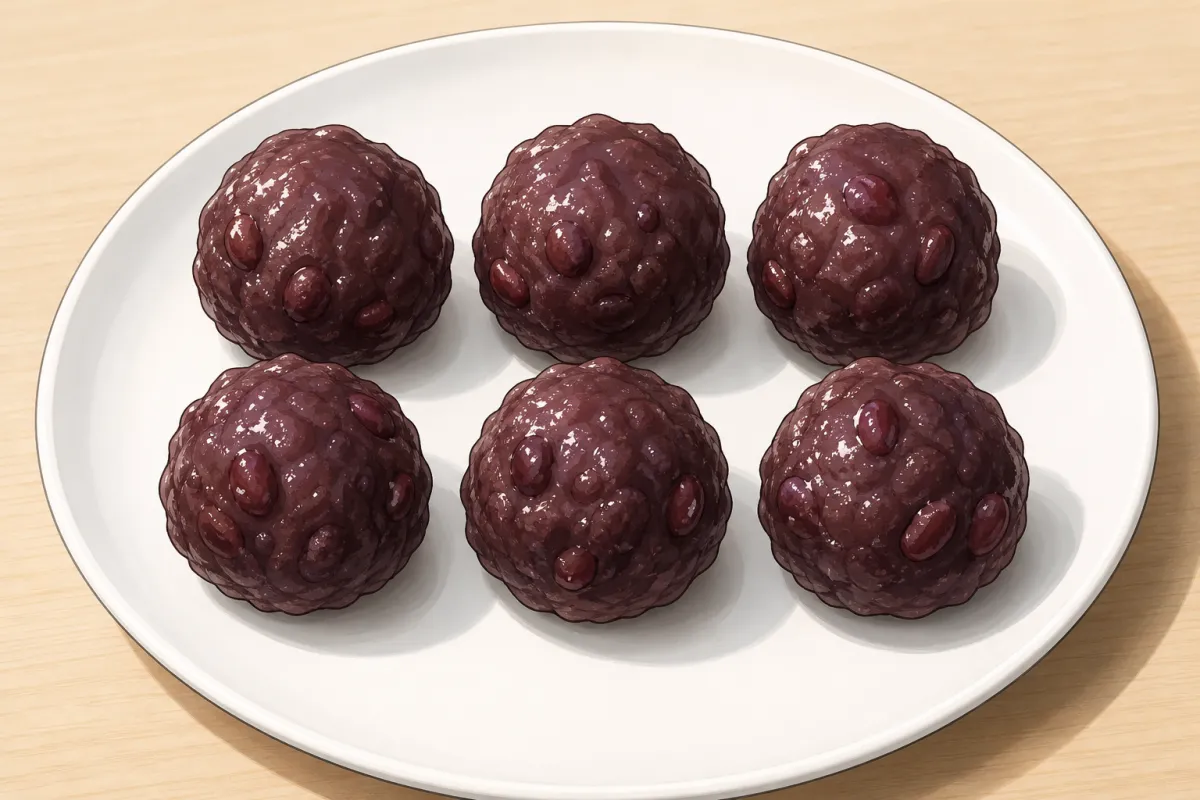
Should look like this 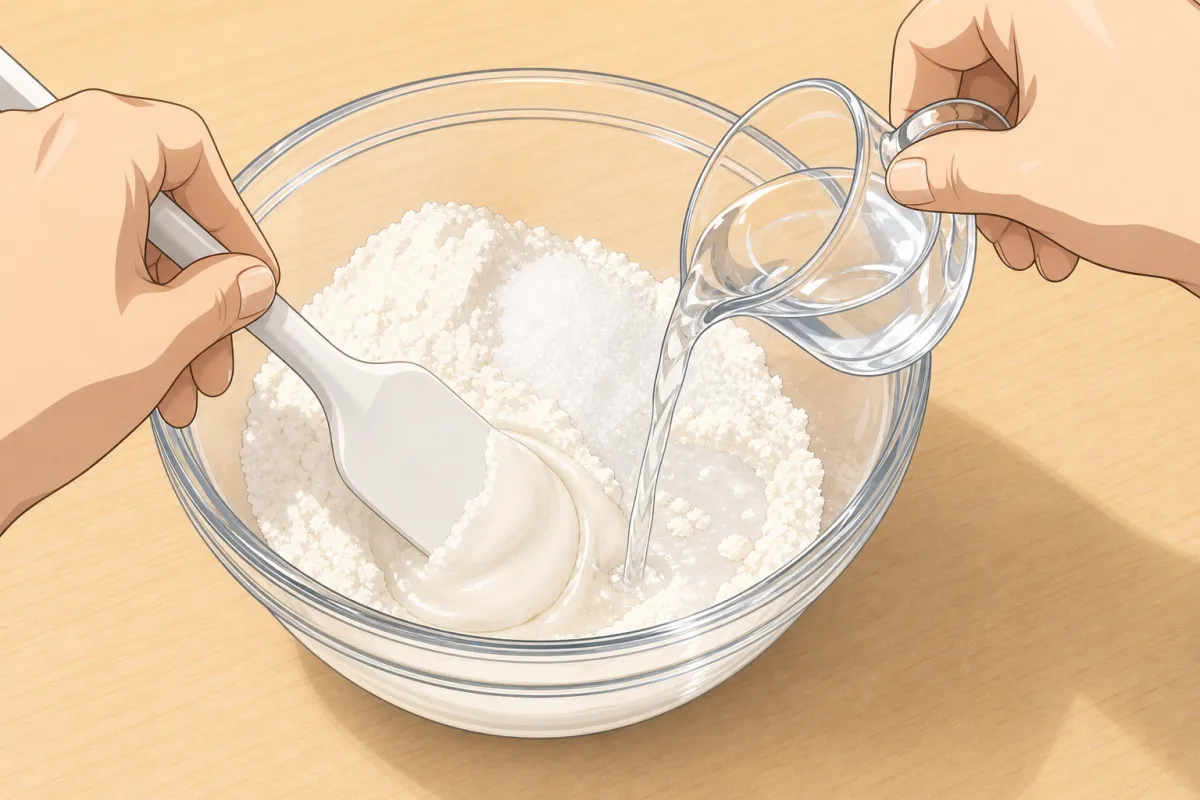
Add the water a little at a time and press out the lumps. 2Mix the batter
3 minFor this step
- Shiratamako (glutinous rice flour)100 g
- White sugar30 g
- Water120 ml
- In a heatproof glass bowl, stir the shiratamako and sugar together.
- Add the water a little at a time, stirring and pressing out the lumps, until it's smooth and pours like thick cream.
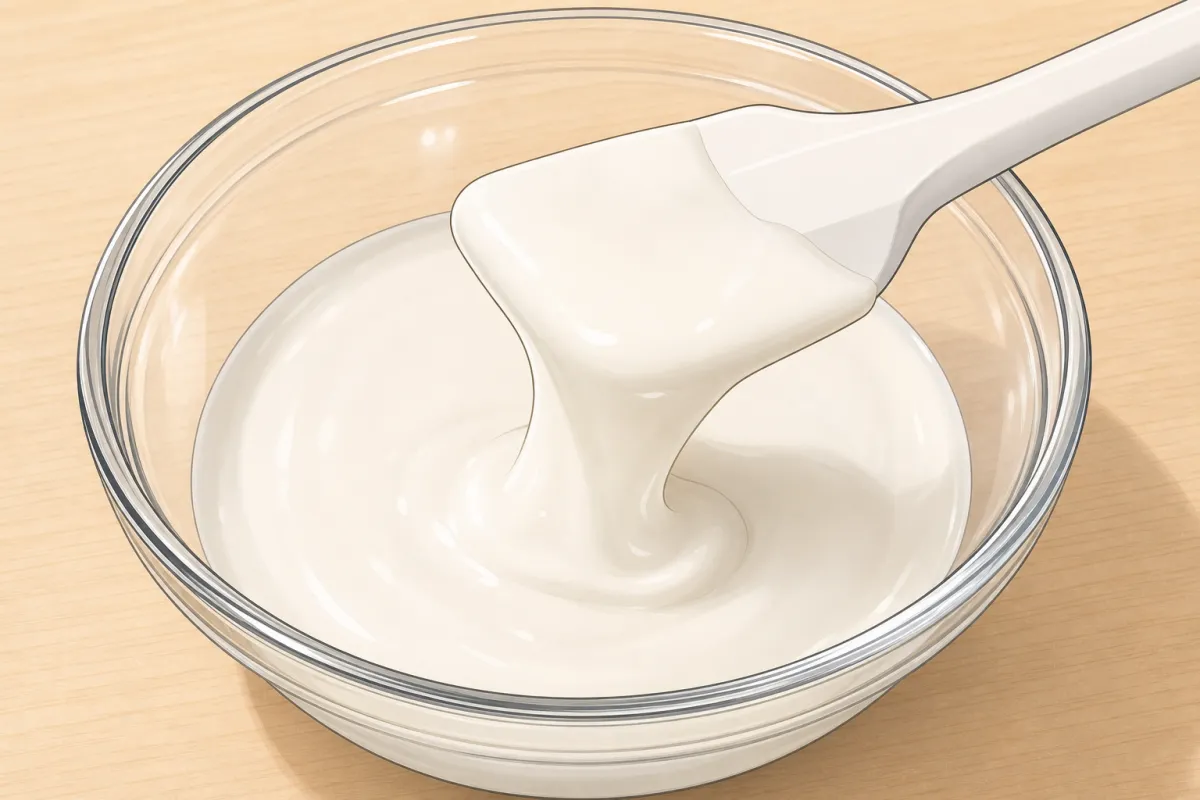
Should look like this 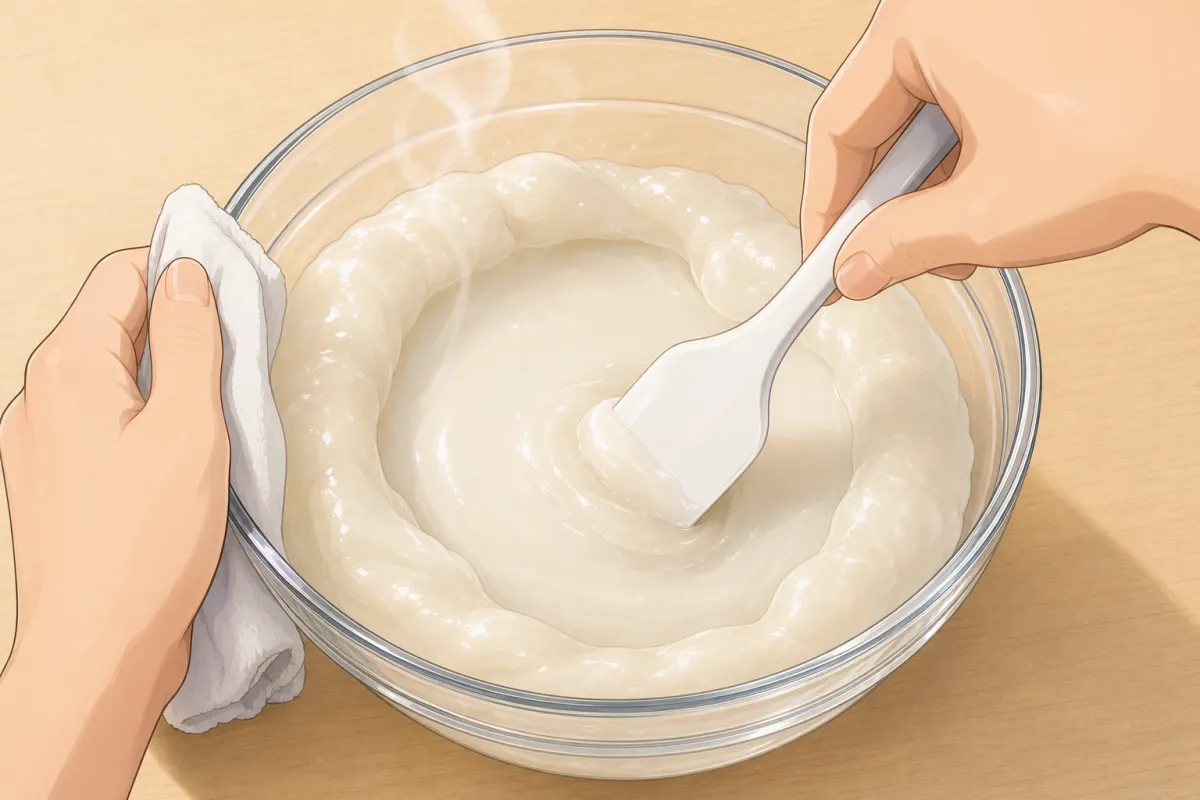
1 minute, then stir hard with a wet spatula: the edges set first. 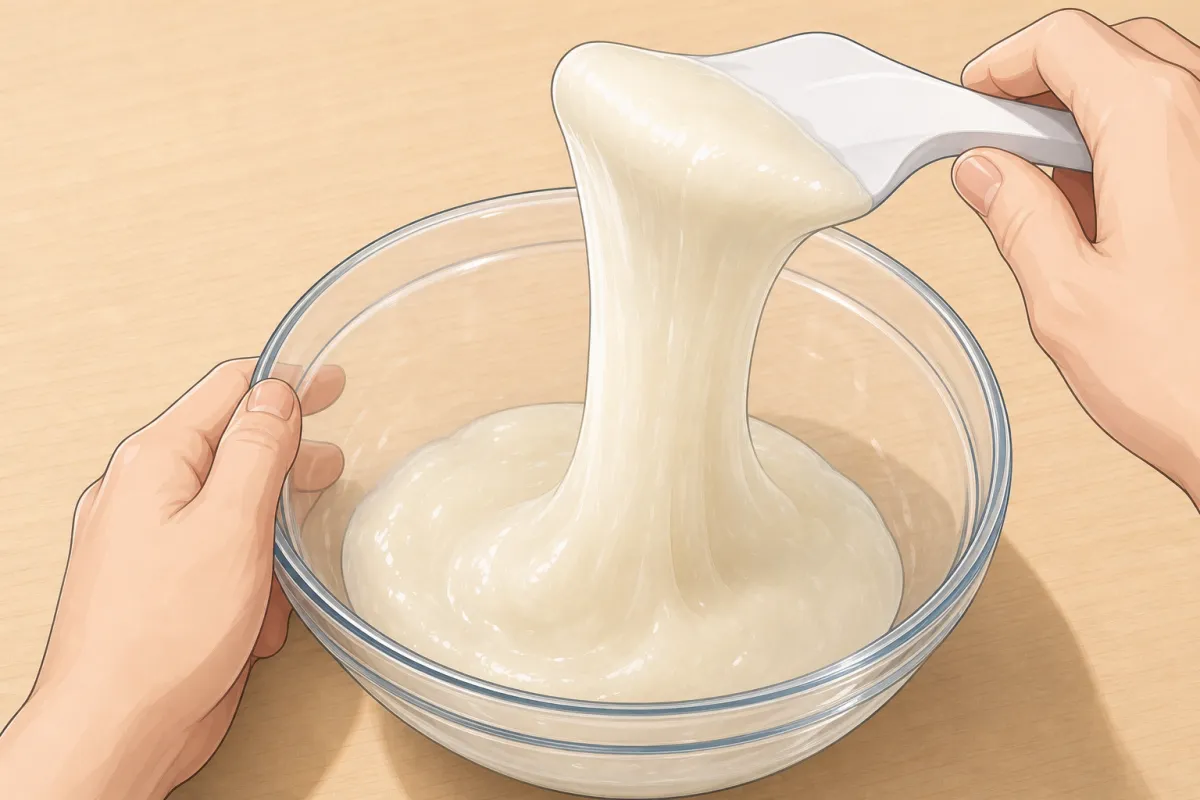
After the last burst it's translucent and stretchy all through. 3Microwave in three bursts
~3 min- Cover loosely with cling film. Microwave 1 minute at 600–700 W, then stir hard with a wet spatula. The edges will have set first.
- Another 1 minute, stir again. It's now a sticky lump.
- Another 20–30 seconds, until the whole mass is translucent, glossy and stretchy, with no opaque white patches. Stir once more.
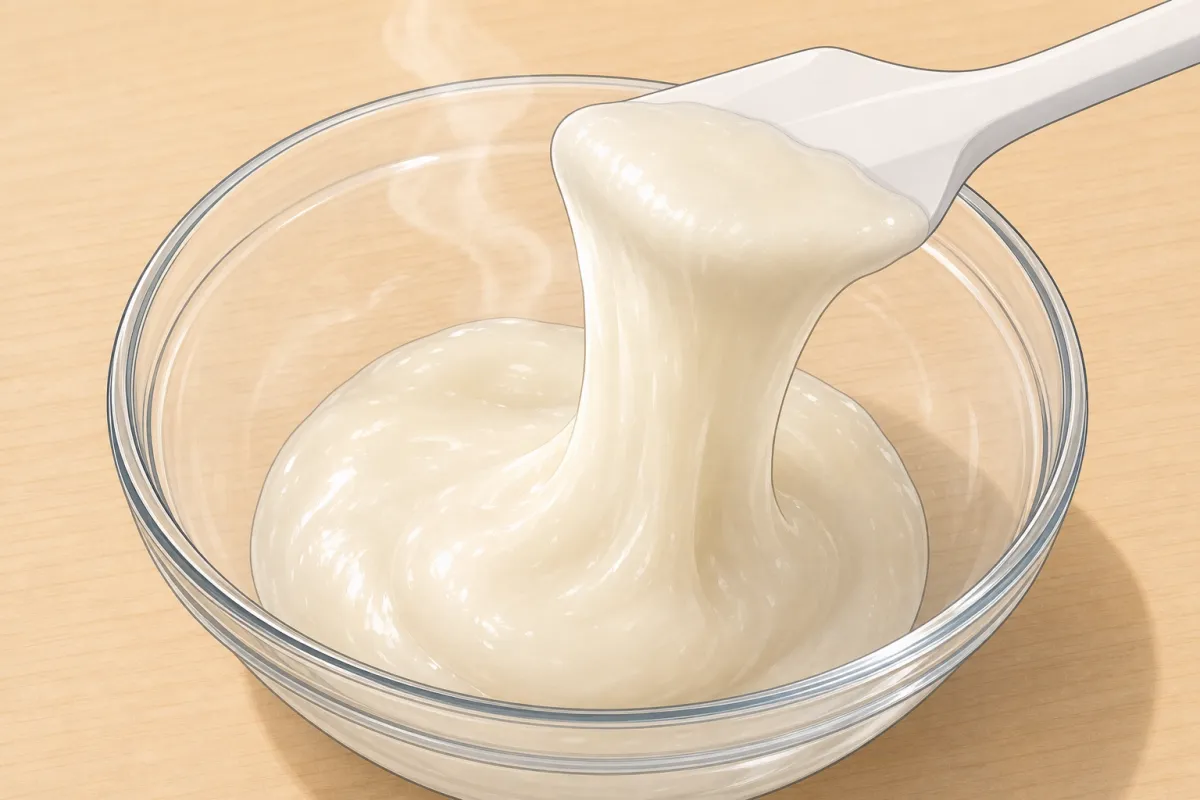
Should look like this 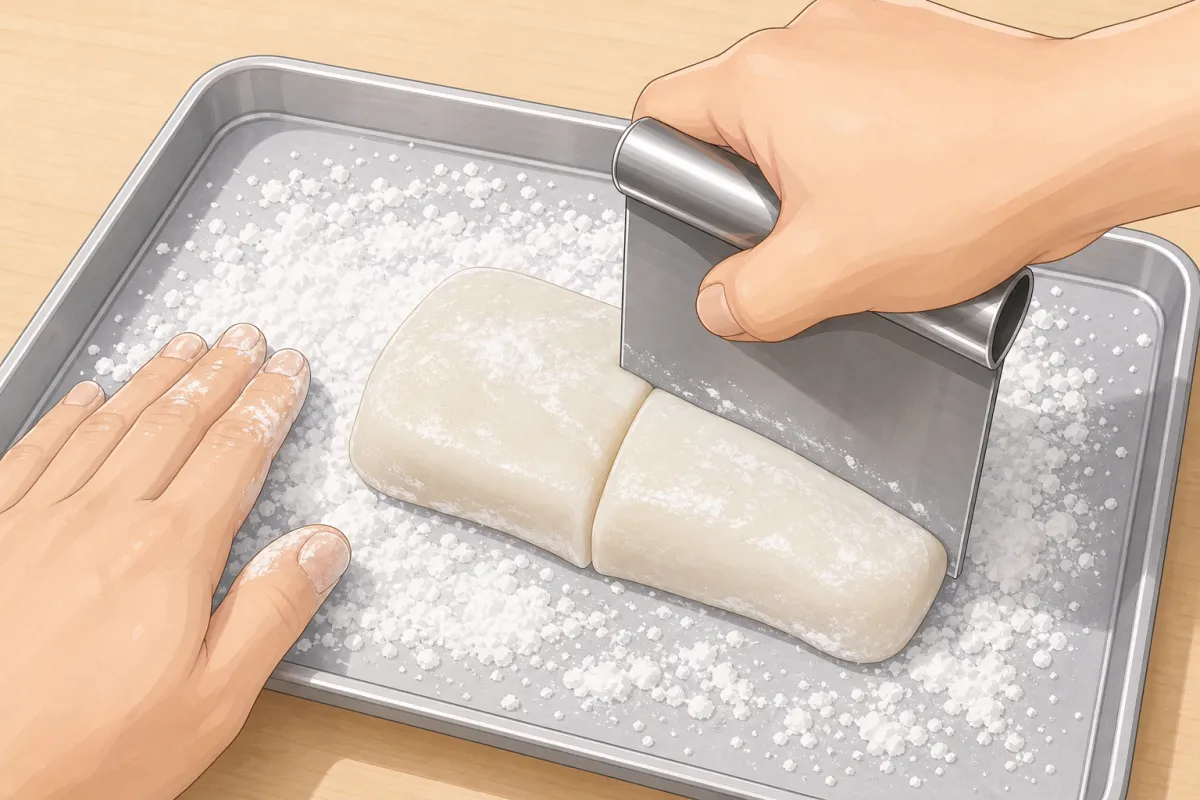
Cut into six with a dusted bench scraper. 4Divide on starch
5 minFor this step
- Potato starch (katakuriko)3 tbsp
- Sift a thick layer of potato starch over a tray. Scrape the hot mochi onto it and dust the top too.
- With a dusted bench scraper, cut it into 6 even pieces, about 40 g each. Wait a minute or two, until you can handle it.

Should look like this 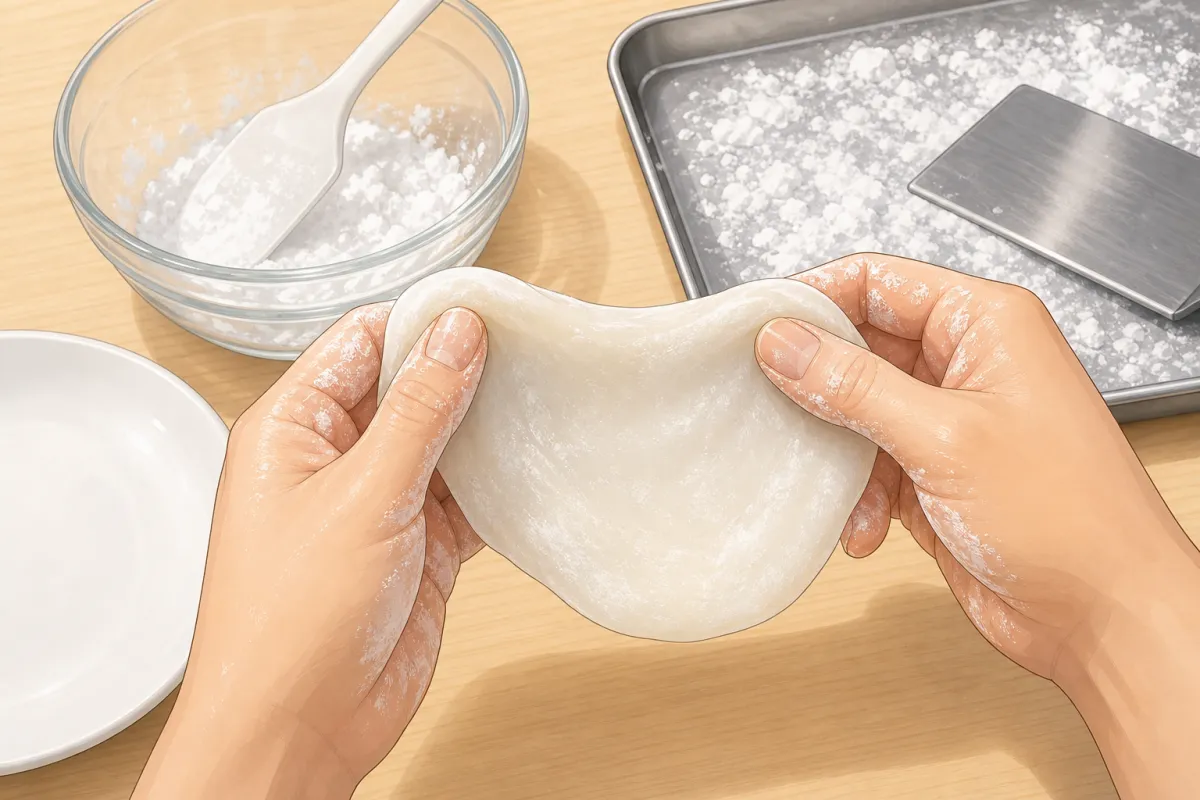
Stretch a piece into an 8 cm disc, edge thinner than the middle. 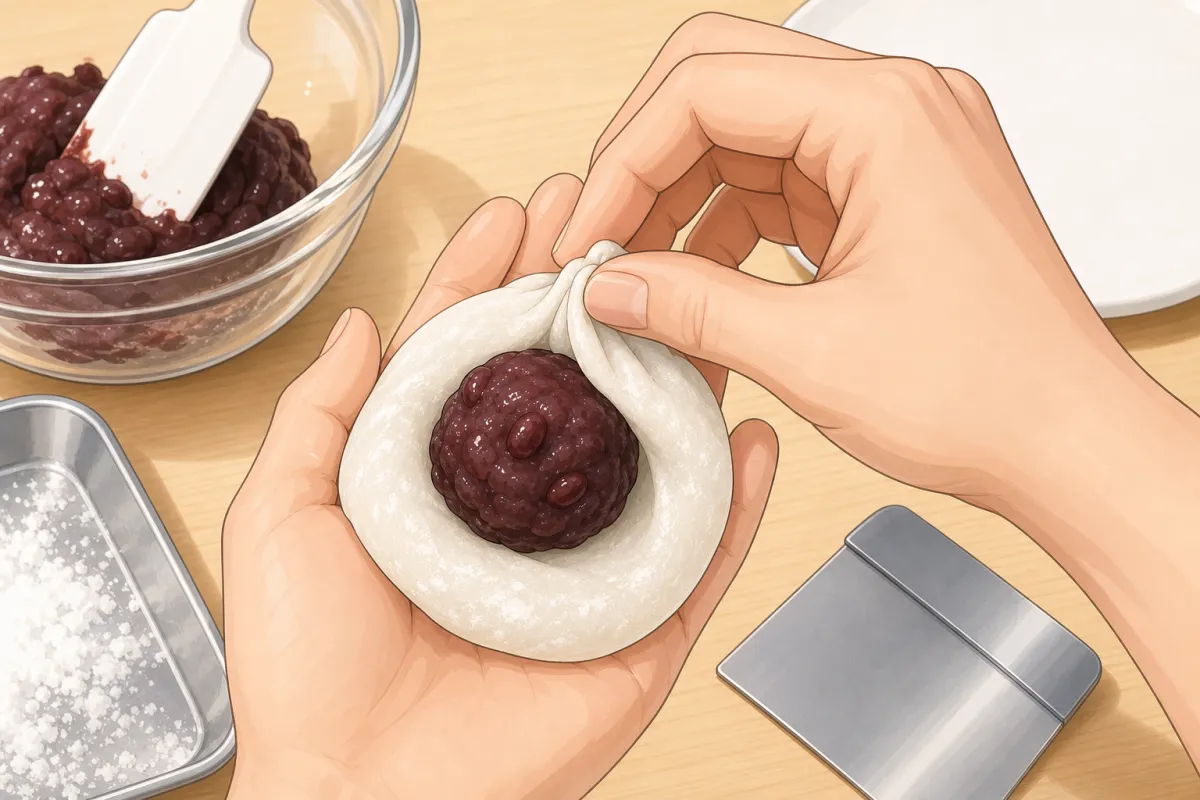
Anko ball in the middle; pleat the edge up over it and pinch shut. 5Wrap and pinch shut
10 min- Take one piece and stretch it into a disc about 8 cm across with starchy fingers. Make the edge a little thinner than the middle.
- Set an anko ball in the middle.
- Pull the edge up over the ball in four or five pleats and pinch them together on top. Twist off any extra.
- Turn it over so the seam is underneath, and cup it in your palm to round it.

Should look like this 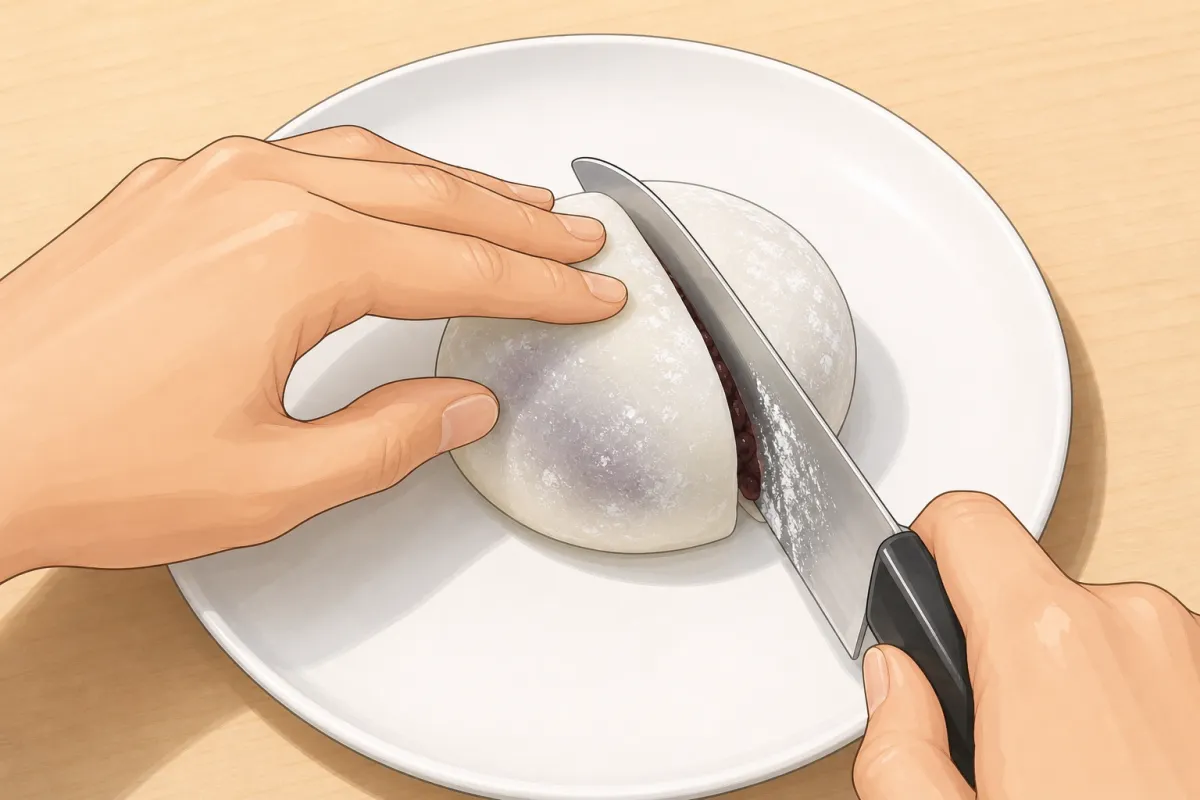
Brush off the loose starch; cut with a wet knife to show the inside. 6Brush and serve
2 min- Brush off the loose starch.
- Serve the same day, at room temperature. Cut one in half with a wet knife to show the thick dark anko in its thin white shell.
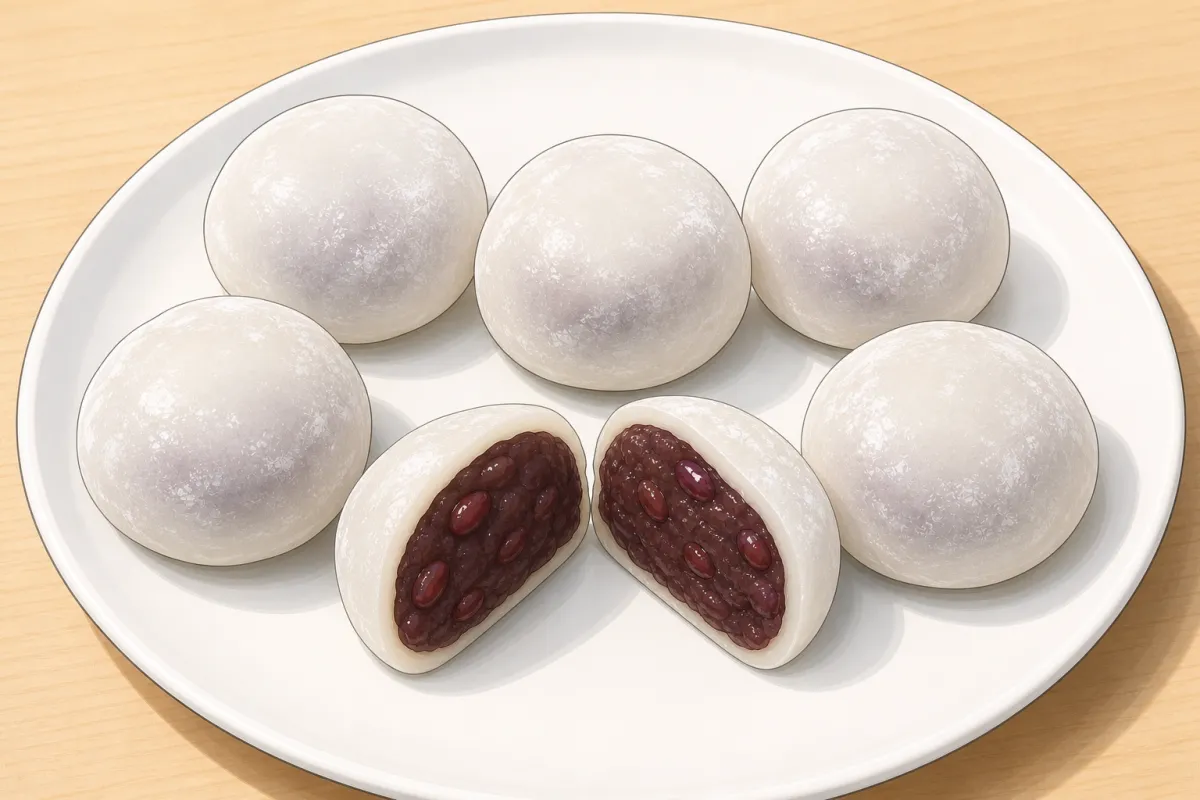
Should look like this
Based on: Just One Cookbook — daifuku