MooKEN-inspired caramel mini cream puffs
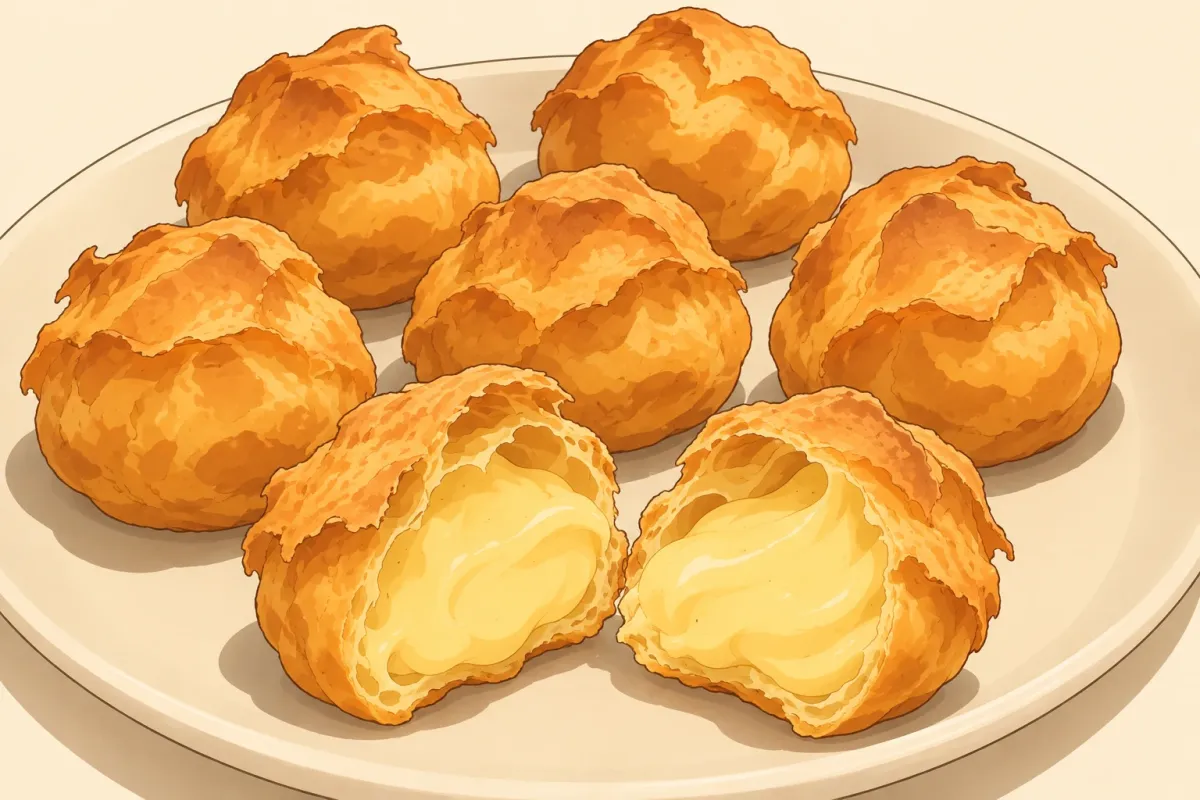
Inspired by the MooKEN photo from Osaka: small puffs, a brittle buttery crust and a generous soft vanilla centre. This version bakes crushed caramel into a thin cookie topping; it is an original home adaptation, not the shop’s published formula. Make the custard first, bake the shells until dry, and fill shortly before eating.
Plain-text recipe · expand & copy
Mise en place — set out in the order it goes in
 Custard ingredients
- milk
- yolks
- sugar
- cornstarch
- butter
- vanilla
- salt
 Caramel topping
- sugar
- water
- softened butter
- flour
 Choux ingredients
- water
- butter
- flour
- salt
- beaten egg
Step by step
1Cook the vanilla custard
~10–15 minFor this step
- Whole milk (custard)250 ml
- Egg yolks (custard)54 g
- Caster sugar (custard)50 g
- Cornstarch (custard)15 g
- Fine salt (custard)0.5 g
- Unsalted butter (custard)15 g
- Vanilla extract1 tsp
- Heat / temperaturemedium; gentle boil
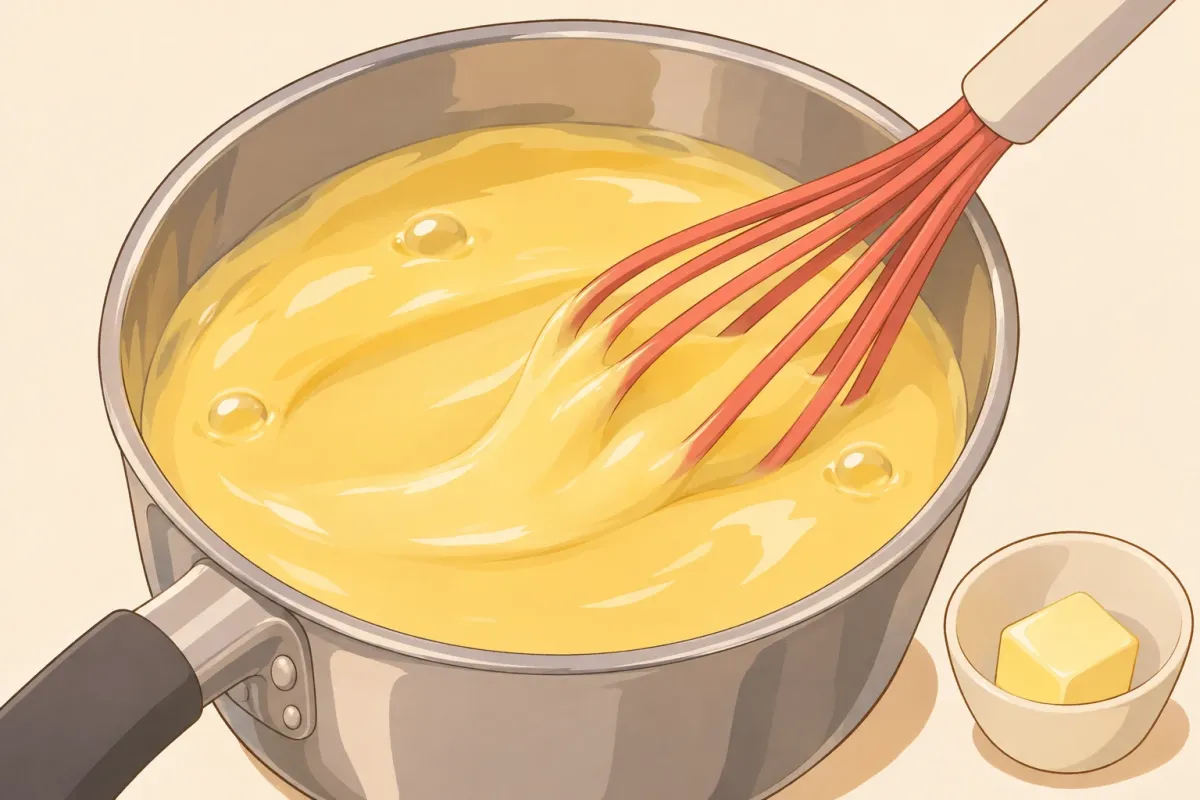
- Whisk the yolks, custard sugar, cornstarch and salt together in a bowl. Heat the milk separately until steaming. Whisk in a little hot milk, then the rest, and return everything to the saucepan.
- Cook over medium heat, whisking across the base and corners. When the cream thickens and large slow bubbles break through, keep whisking at a gentle boil for 1 minute. Thickening alone is not the end point. Remove from the heat and stir in the custard butter and vanilla. The cream should be glossy and hold a broad whisk trail.
2Chill the custard while making the shells
~2 h, in parallelFor this step
- Heat / temperaturerefrigerate at 4 °C or below
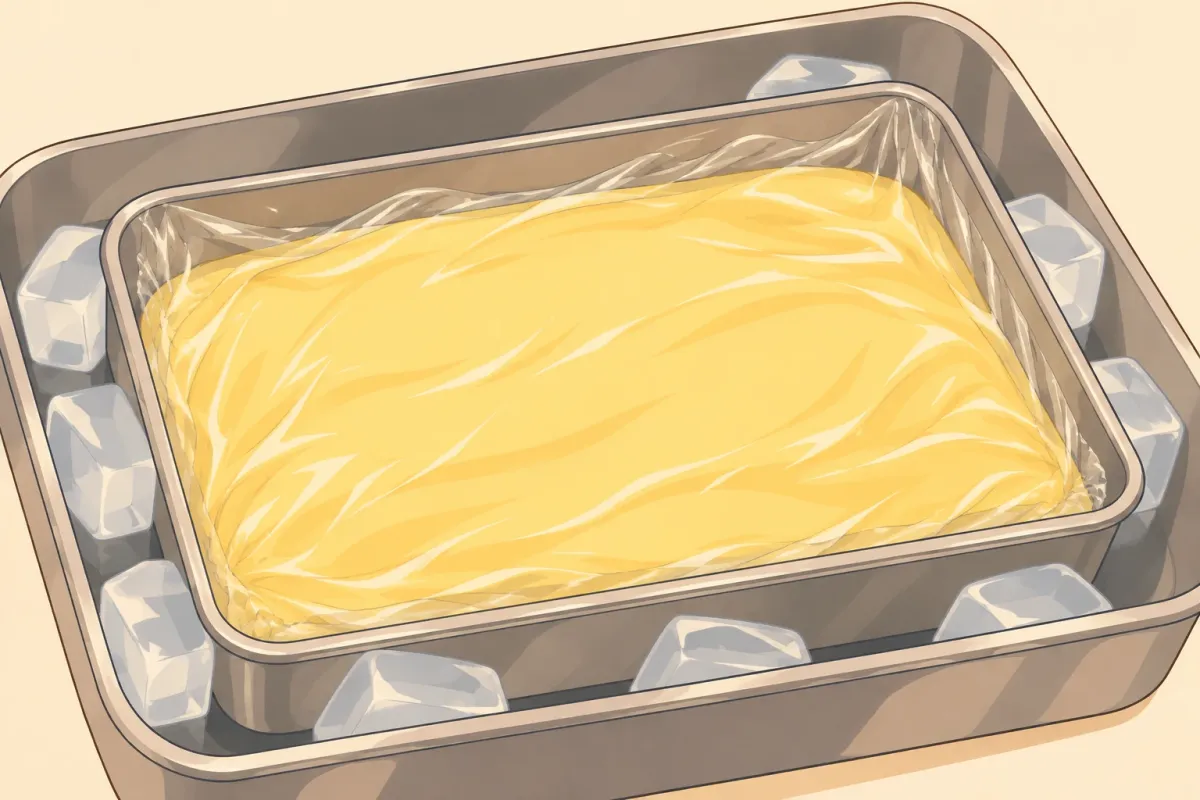
- Spread in a shallow clean tray, about 1–2 cm deep. Press heat-rated food wrap directly against the cream. Set the tray over ice water to remove the initial heat, then refrigerate until cold throughout, ideally 4 °C or below; allow about 2 hours. Keep water out of the custard. Continue with the topping and pastry while it chills.
3Make and cool the caramel
~15–20 min, including coolingFor this step
- Caster sugar (caramel)40 g
- Water (caramel)15 ml
- Heat / temperaturelow → medium
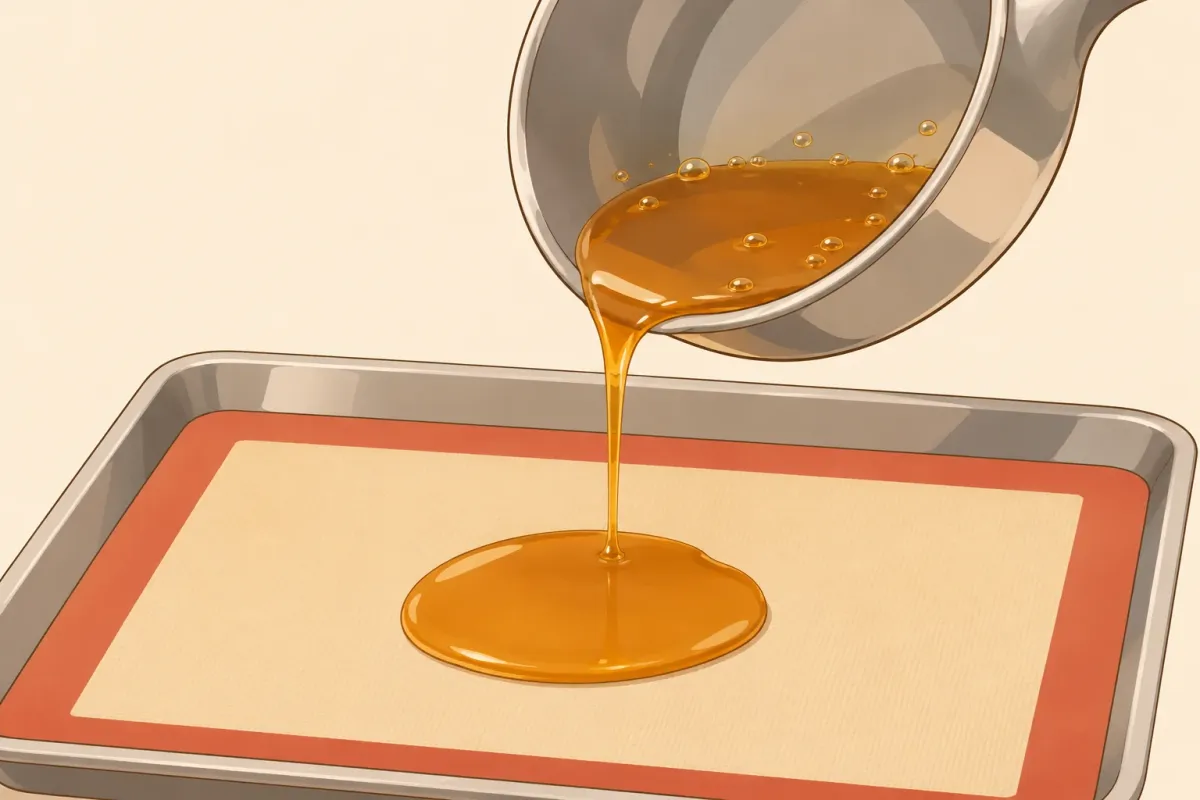
- Set a silicone mat on a heatproof tray. In a small heavy saucepan dissolve the caramel sugar in its water over low heat. Raise to medium and boil without stirring, swirling gently if needed, until medium amber, about 4–7 minutes. Colour is the useful guide in this small quantity; do not wait for dark brown.
- Pour a thin layer onto the mat and leave until completely hard and cool, about 10 minutes. Do not touch hot sugar. Once cold, break into pieces and crush in a closed sturdy bag into small crumbs, mostly under 1 mm. Keep dry.
4Roll and freeze thin caramel-cookie discs
~20 min, including freezingFor this step
- Unsalted butter, softened (topping)25 g
- Caster sugar (topping)15 g
- Plain flour (topping)35 g
- Heat / temperaturefreeze; preheat oven to 180 °C
- Mix softened topping butter with topping sugar, then fold in the topping flour and all the cold crushed caramel. Stop when a soft cohesive dough forms; do not whip it fluffy.
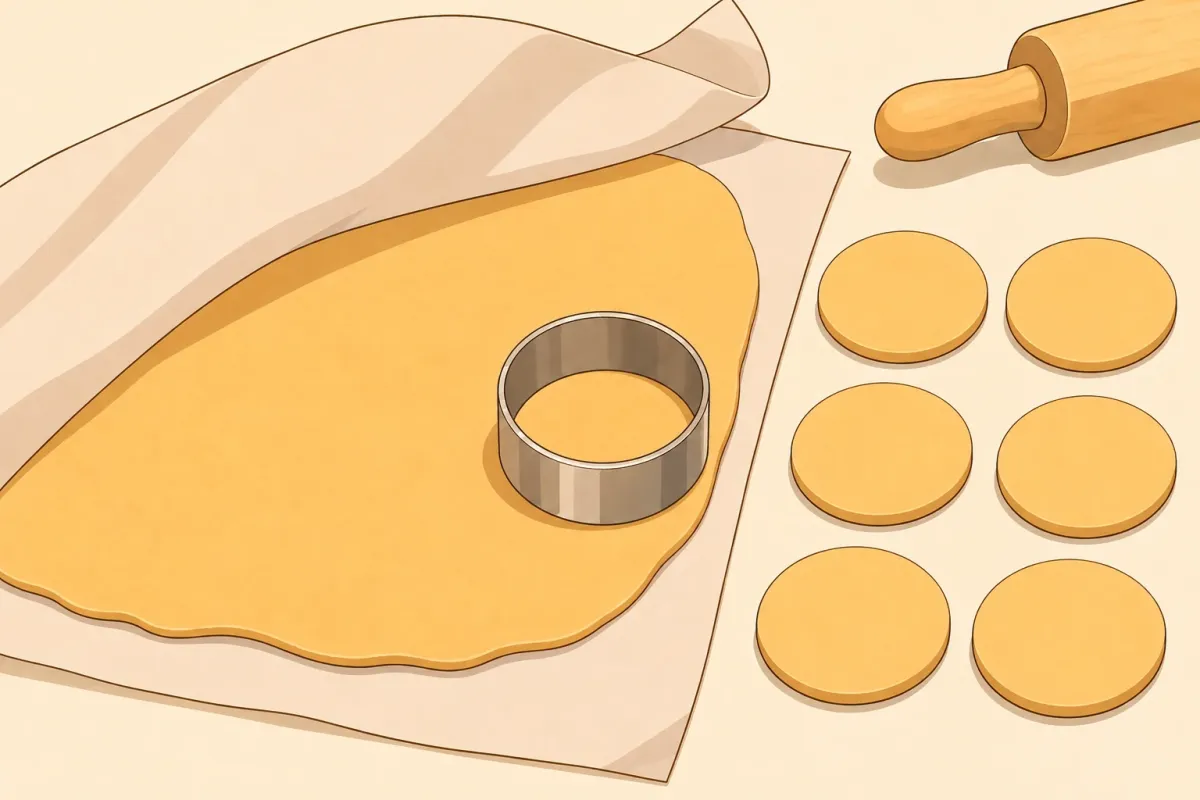
- Roll between parchment sheets to 2 mm thick. Freeze for 10–15 minutes, cut 3 cm discs, then return them to the freezer. Gather scraps and reroll once. You need one disc for each puff; freeze spare discs for another batch. Begin preheating the oven to 180 °C, conventional heat.
5Cook a smooth choux panade
~8–10 minFor this step
- Water (choux)115 ml
- Unsalted butter (choux)55 g
- Fine salt (choux)1 g
- Plain flour (choux)75 g
- Heat / temperaturemedium-low; cool below 55 °C
- TemperatureThe paste should gather into a smooth ball, leave a thin film on the pan base and reach about 75–80 °C; do not scorch it.
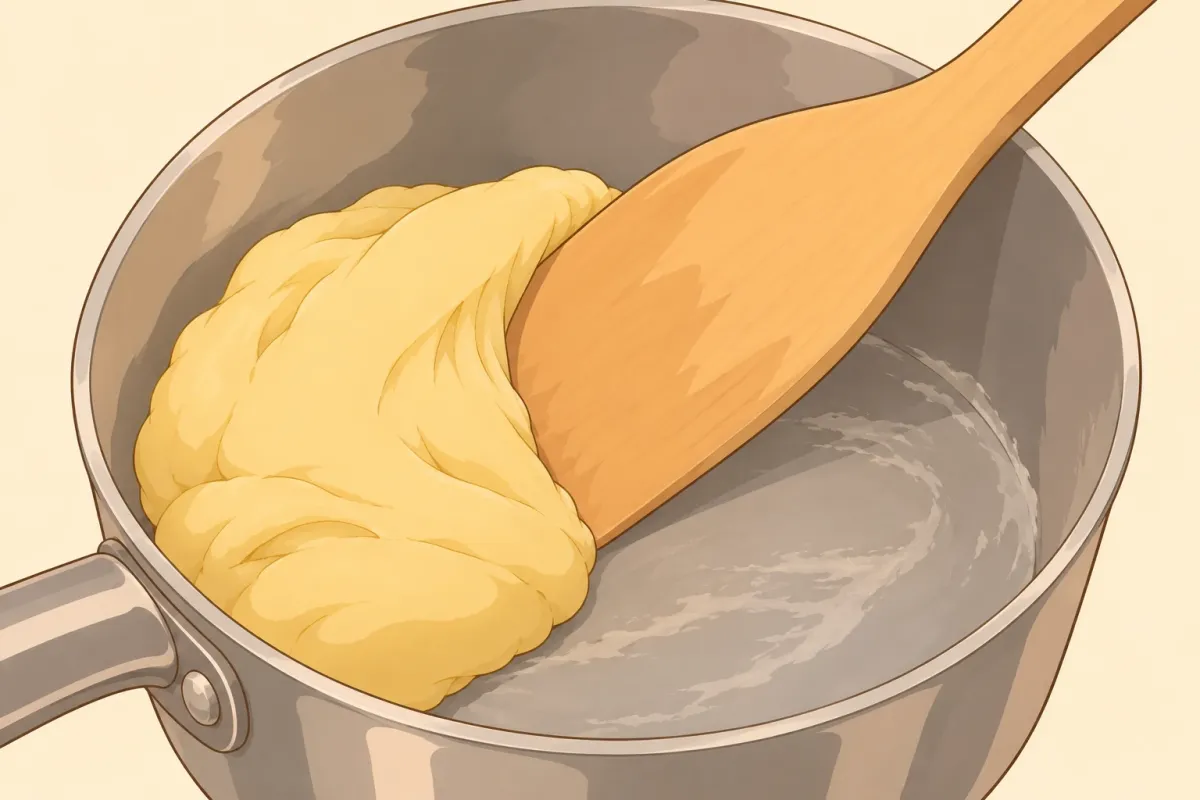
- Sift the choux flour. Put choux water, choux butter and choux salt in a saucepan. Heat until all butter melts, then bring just to a full boil. Remove from the heat, add all the choux flour at once and stir firmly.
- Return to medium-low heat and stir for 1–2 minutes. The paste should gather into a smooth ball, leave a thin film on the pan base and reach about 75–80 °C; do not scorch it. Transfer to a bowl and stir until below about 55 °C before adding egg.
6Add egg until the paste falls in a V
~5 minFor this step
- Beaten whole egg, without shell100–115 g; prepare a little extra
- Beat the whole eggs and weigh them without shells. Add about 100 g to the warm paste in four additions, mixing each one completely before the next. The paste may look split briefly; keep mixing.
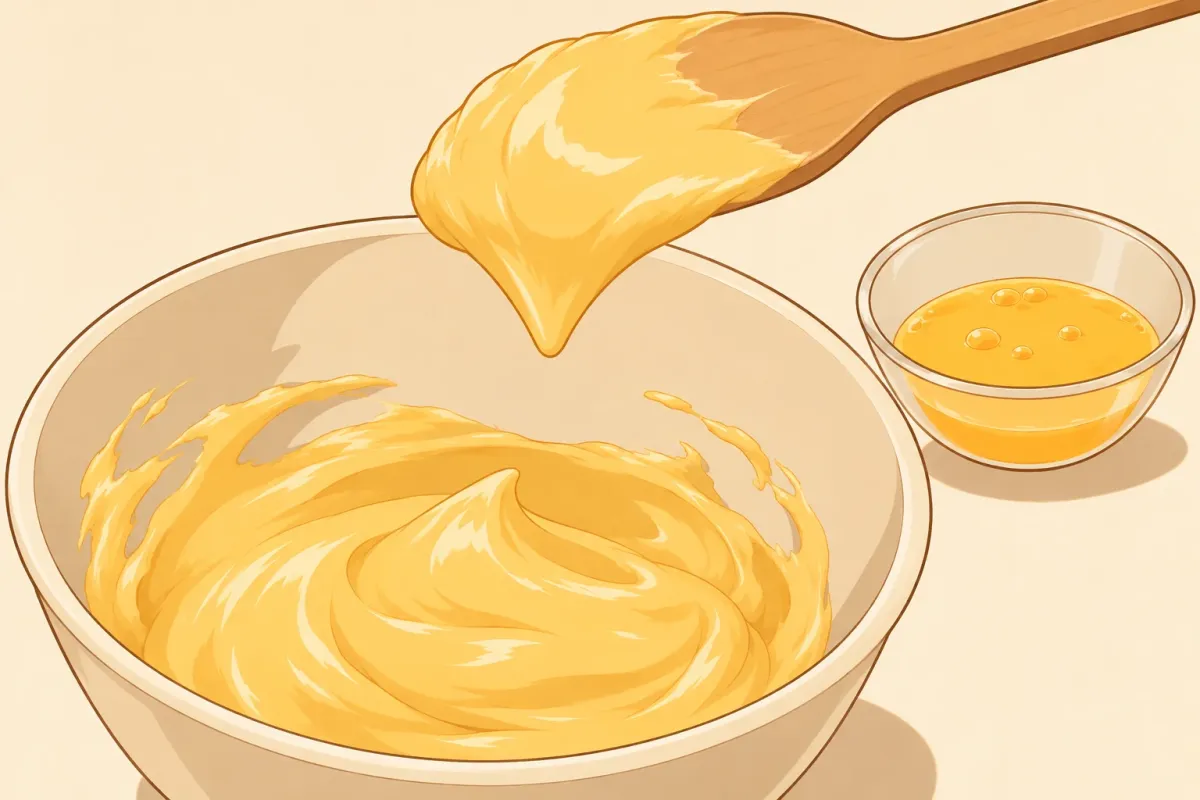
- Lift the spatula: the glossy paste should fall slowly and leave a broad V-shaped ribbon hanging from the edge. Add the reserved egg only as needed, 5 g at a time, usually up to 115 g total. Stop by texture, not by finishing the egg. It must pipe into a mound that holds its shape.
7Pipe 24 small, evenly spaced mounds
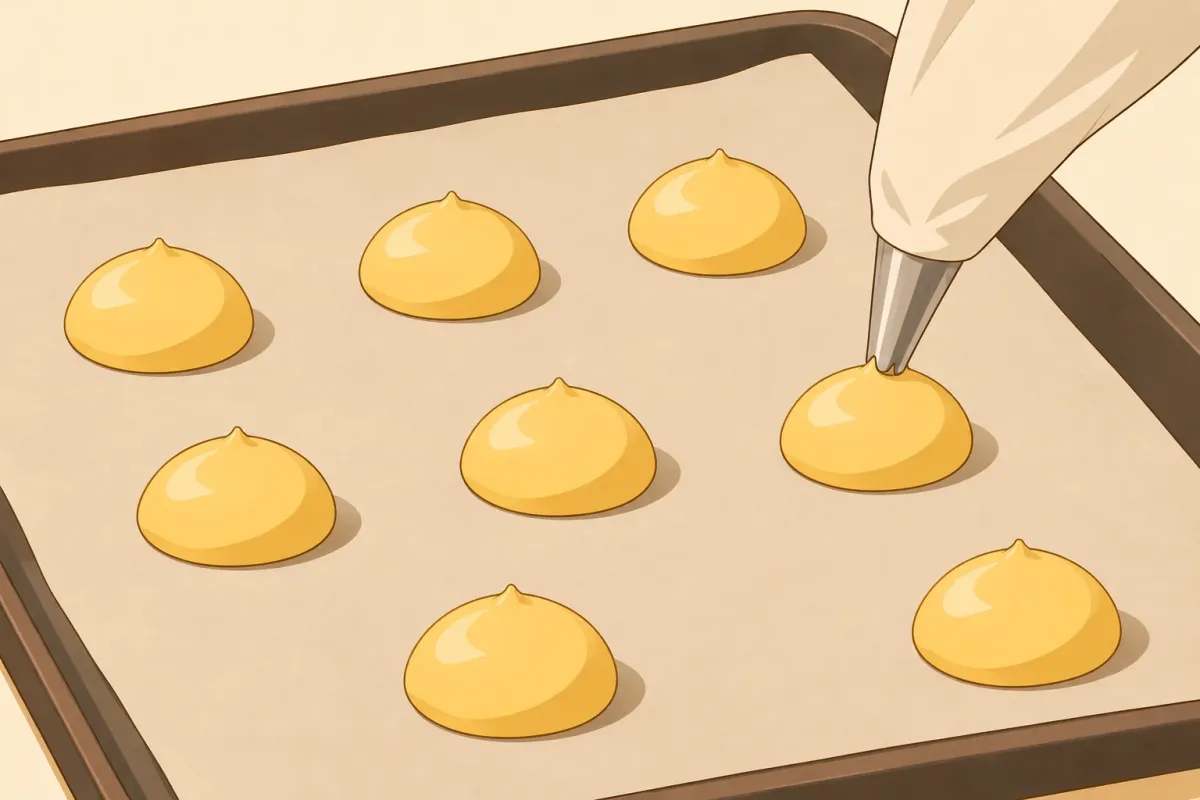
~5–8 min- Line the tray with good non-stick parchment or a silicone baking mat. Transfer the paste to a piping bag with a 10 mm round nozzle. Hold vertically and pipe about 24 mounds, 2.5–3 cm across, leaving about 3 cm clear space between them. For the base batch, roughly 12–14 g paste per mound is a guide; consistency and even size matter more.
- Lift the nozzle sideways to finish and flatten sharp peaks with a barely damp fingertip. Do not spread the paste into flat discs. A tiny trial mound should keep a rounded profile rather than puddling.
8Cap each mound with one frozen disc
~3 minFor this step
- Heat / temperature180 °C oven ready
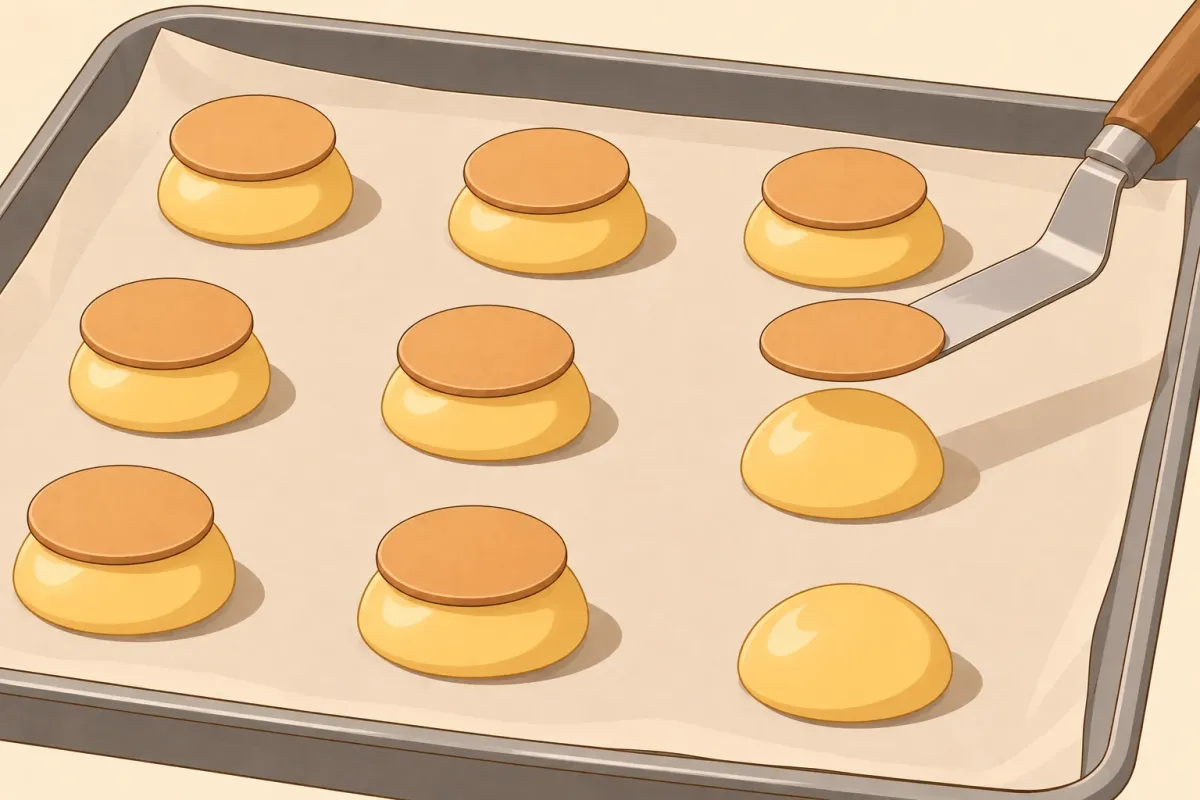
- Place one frozen caramel-cookie disc flat and centred on each mound; do not press it down. Work quickly so the discs stay firm. No additional sugar, sauce or cream goes on before baking. Check the oven has fully reached 180 °C.
9Bake, then lower the temperature to dry
~35–40 minFor this step
- Heat / temperature180 °C → 160 °C, conventional
- TemperatureIf still soft, give them another 5 minutes at 150–160 °C.If only fan heat is available, 160 °C → 140 °C is a starting conversion; the time can differ, so use the firm-shell and dry-interior checks.
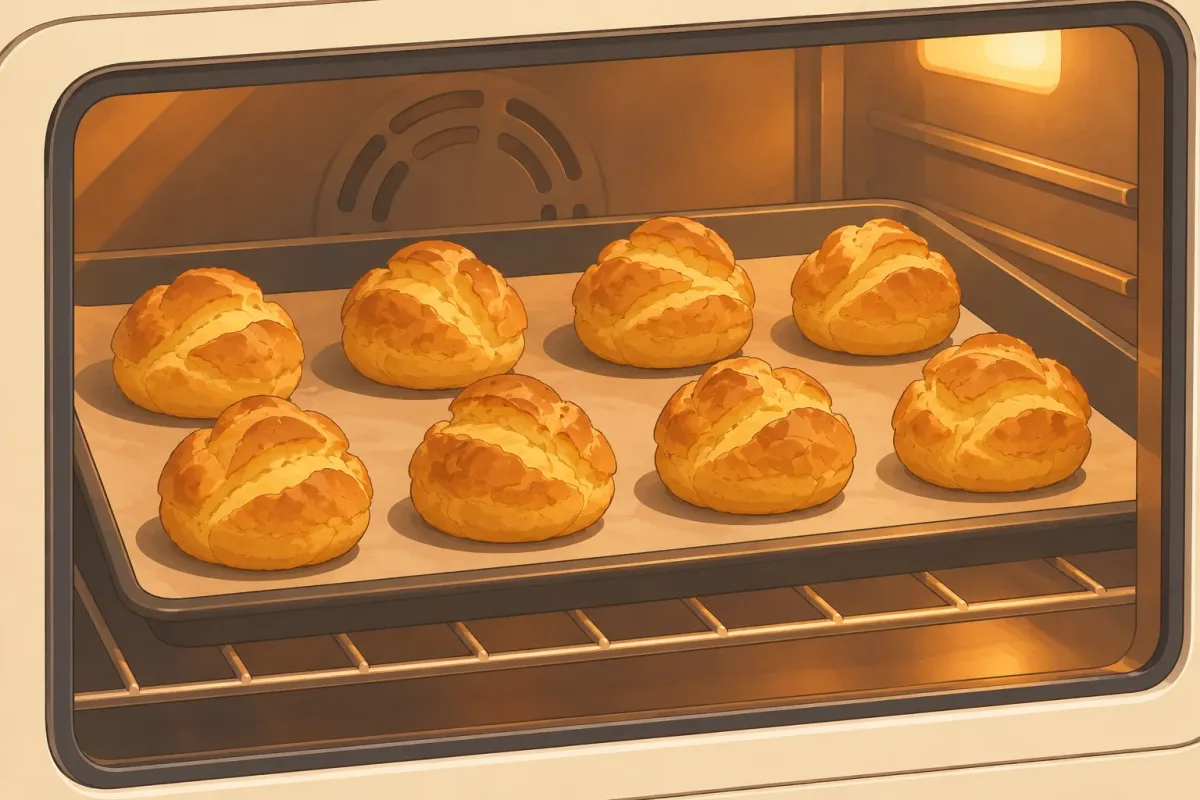
- Bake on the middle rack at 180 °C for 20 minutes. Without opening the door, reduce to 160 °C and continue for about 15–20 minutes. Do not open during the first 30 minutes: unset shells can collapse. Bake one tray at a time for this schedule.
- Finished shells should be well risen, golden to amber and firm around the sides. Caramel can brown before the pastry dries, so colour alone is not enough. A test shell should feel light and have a hollow, dry interior rather than a wet dough band. If still soft, give them another 5 minutes at 150–160 °C.
10Vent, dry briefly and cool completely
~25–35 minFor this step
- Heat / temperatureoven off, then room temperature
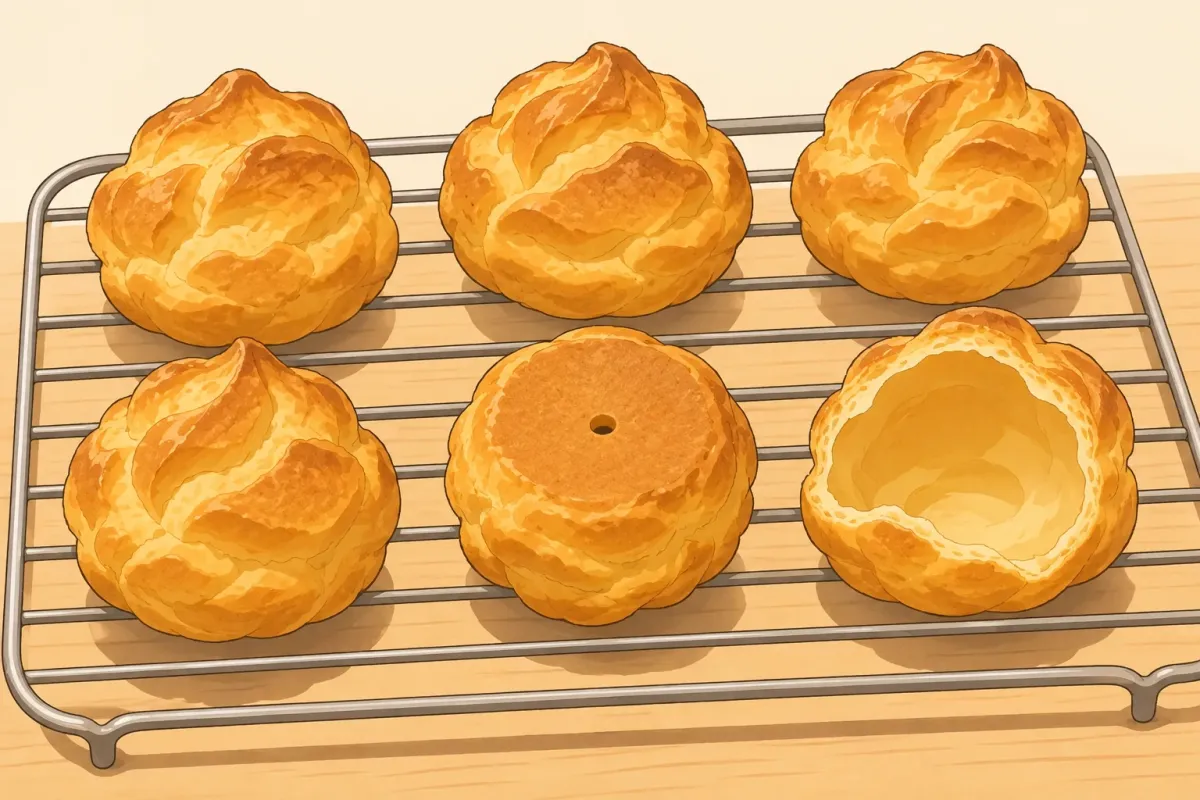
- Once the shells are structurally firm, remove the tray and make a small hole in the bottom of each puff with a skewer or narrow nozzle. Put them back in the switched-off warm oven for 5 minutes, with the door slightly ajar, then move to a rack.
- Cool until no warmth remains, about 20–30 minutes. Open one sacrificial shell: the cavity should be empty and the wall thin and dry. Do not fill warm shells; warmth thins the cream and condensation softens the crust.
11Smooth the cold custard and fill through the base
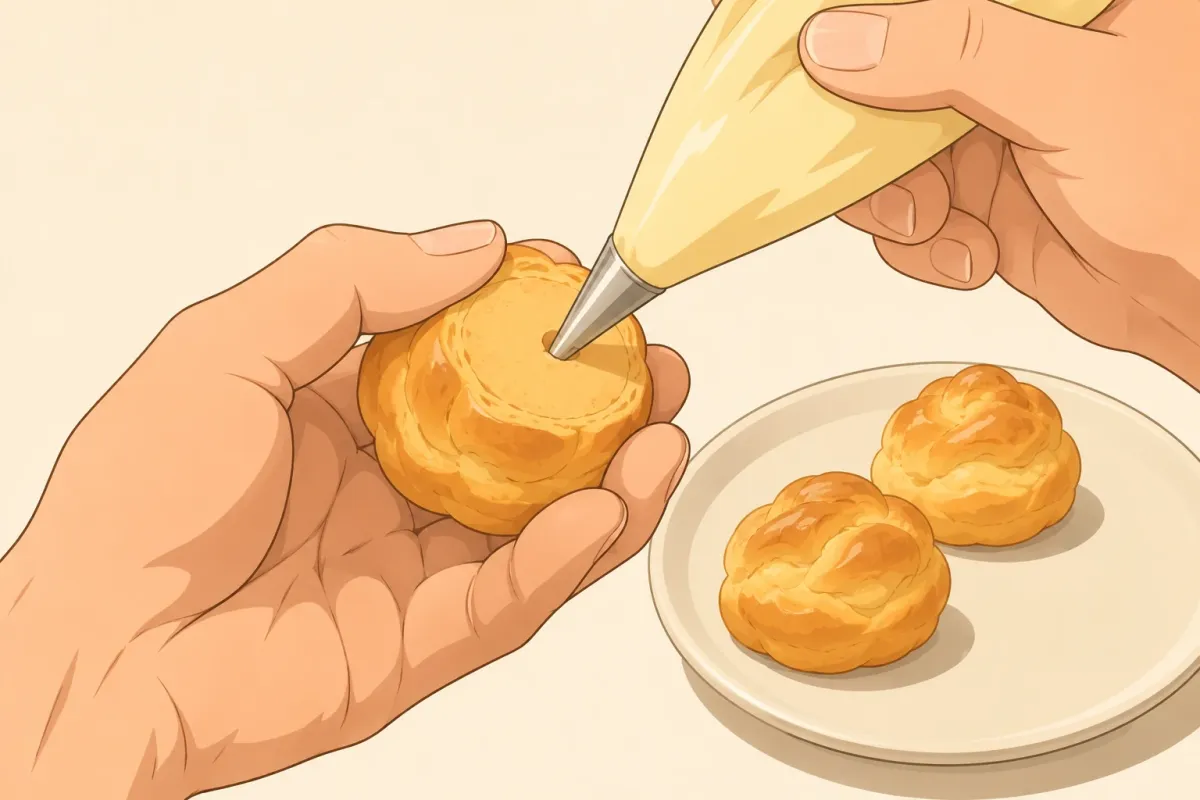
~10 min- Whisk the chilled custard until smooth and supple, without adding milk. Transfer to a clean bag with a 4–5 mm round filling tip. Insert into the bottom hole and squeeze gently until the puff feels heavier and full; stop before the shell cracks. For this mini size, about 12–14 g custard per puff is a starting guide.
- Keep the tops intact rather than slicing the puffs into sandwiches. Make one filled test puff, break it and check that cream reaches the cavity edges. Refrigerate remaining custard promptly.
12Serve while the shell still cracks
- Fill only the amount you will eat soon and aim to serve within 30–60 minutes for the clearest crisp-shell contrast. The target is a light shell that cracks under the bite and cool, soft custard inside. No caramel sauce is needed. This is baked choux, not deep-fried pastry.
Based on: MooKEN reference — the linked Reddit photo · MooKEN tasting notes and cross-section — Yossy · Phol Tantasathien — caramel-cookie Osaka cream puffs (chocolate version) · King Arthur Baking — mini choux pastry · King Arthur Baking — pastry cream · Just One Cookbook — custard cooking and cooling